
Football season creates short procurement windows for hotel lounges, apartment viewing rooms, and mixed-use hospitality spaces, so buyers need more than a good-looking sample. A compressed sofa program has to land on time, recover correctly after unpacking, and keep freight under control. In RFQs, buyers may also see terms such as compressed sofa in a box, compressed sofa bed, sofa in a box compressed, and compressed foam sofa, but the approval checks should stay tied to real B2B data.
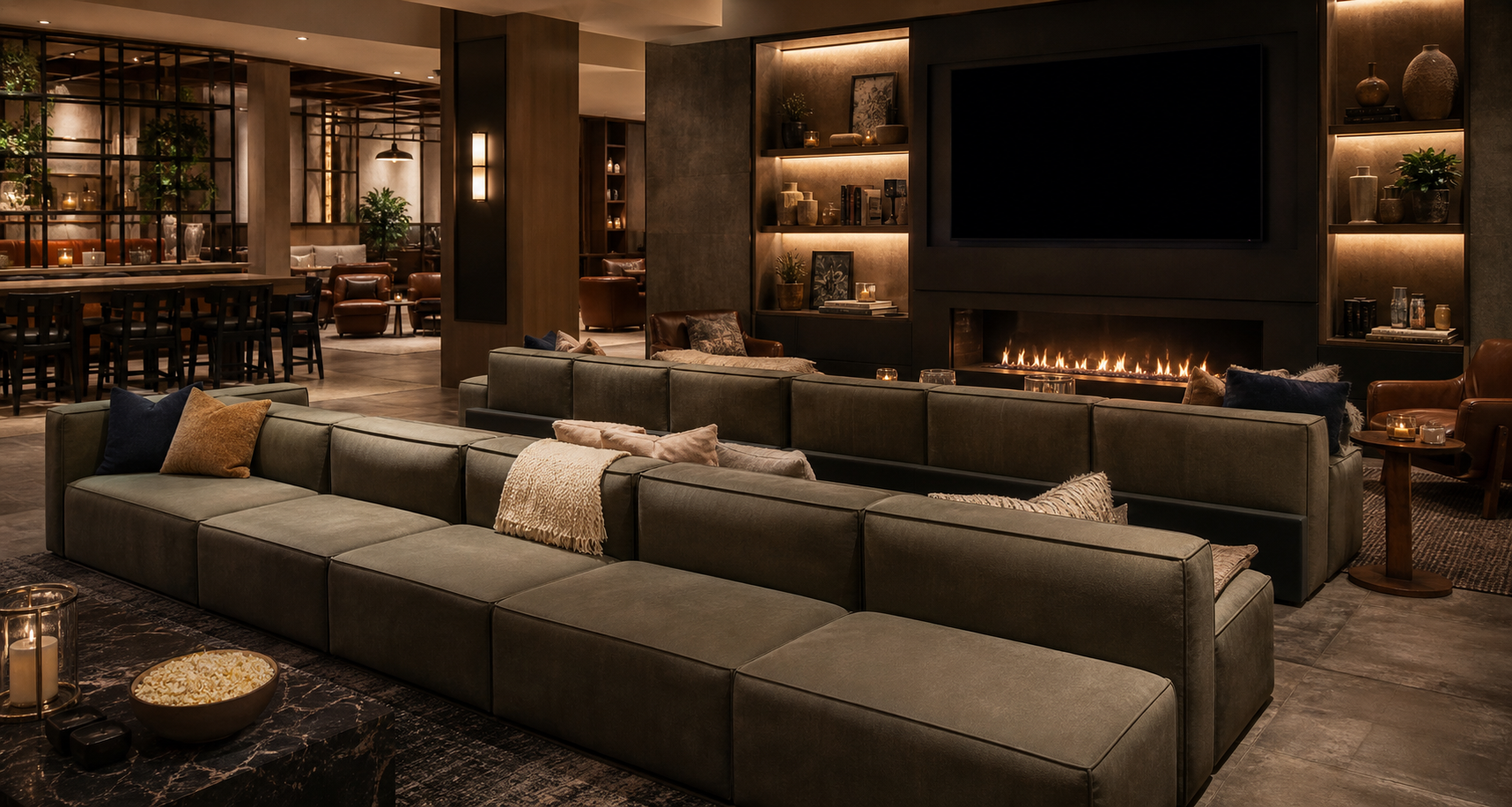
Start with room use and delivery timing together
For football-season lounge projects, the seat plan and the delivery plan should be reviewed at the same time. A hotel viewing lounge usually needs group seating with clear sightlines, while an apartment clubhouse or serviced unit may need one larger sleeper model plus several compact lounge seats. That is why buyers should begin with the live compressed sofa collection and compare each model by assembled size, packed size, material direction, and loading impact instead of styling alone.
The collection page also gives practical order signals that matter early in sourcing:
- Standard MOQ is 500 units.
- Sample orders are supported.
- Sample lead time is listed at 7 to 15 days depending on model and customization.
- Bulk lead time is listed at 30 to 45 days after sample approval.
- Mixed-model orders are reviewed individually.
Those numbers matter because seasonal lounge projects often combine a main seating SKU, one accent format, and a sleeper option for guest or VIP rooms.
Compare model data for the main lounge zone and overflow rooms
For the main group-viewing area, the YS028 L-shape fabric sectional is useful because its published data is close to what an importer or project buyer needs for evaluation. The model is described as fabric upholstery with sponge filling, D35 seat foam, a cushion back, straight arms, and a concealed base. The listed packed size is 55 x 55 x 112 cm, the single-package gross weight is 69 kg, mail packing is supported, and the warranty is listed as 3 years. For hotel lounges, those details help buyers judge whether the model can survive both freight handling and frequent guest use.
For mixed-use rooms or apartment guest spaces, the LS1016 folding sofa bed gives clearer sleeping-format data. Its standard product size is 200 x 85 x 70 cm, while the lying-flat mode reaches 200 x 215 x 70 cm. The packed size is 112 x 34 x 35 cm, gross weight is 29.5 kg per carton, carton quantity is one piece per carton, carton CBM is 0.133, estimated 40HQ capacity is 503 units, MOQ is 500 units, and lead time is about 45 days. That makes the model practical for buyers who need one sofa family that can cover both seating and overnight use during peak guest periods.
Approve the packing plan before approving the color swatch
Seasonal lounge projects often fail on freight planning rather than on comfort. The compressed sofa vacuum pack shipping model is useful here because its logistics claims are stated in operational terms: 60% CBM reduction versus conventional assembled sofas, up to 2.5x more units per 40HQ, and at least 95% rebound within 72 hours after unpacking. Those are the exact claims a buyer should test during sample review and mixed-container planning.
Before deposit release, procurement teams should ask for:
- Final carton dimensions for each approved SKU, not only one sample format.
- Gross weight per carton so unloading labor and warehouse placement can be planned.
- Rebound checks at 24, 48, and 72 hours after unpacking.
- Confirmation of whether the same loading plan still works when sectionals and sleeper units ship together.
- Outer-carton protection, barcode position, warning marks, and project-label requirements.
If the supplier cannot connect those questions to a live container loading support page, the landed cost is still uncertain even when the unit price looks competitive.

Review materials and factory capability in one conversation
A football-season project is usually too compressed for separate rounds of product review and packaging review. The OEM and ODM sofa manufacturing page shows why buyers should combine those discussions. MagiSofa lists support for fabric selection, color direction, size adjustment, private-label branding, carton customization, instruction manuals, compression-method review, and model-based loading planning. For project sourcing, that is more useful than a generic promise of customization because it shows the factory is thinking about the sofa and the shipping system together.
The material discussion also needs to stay concrete. YS028 uses fabric upholstery with sponge filling and D35 seat foam. LS1016 uses checked velvet fabric. On the OEM page, buyers are told they can adjust sofa width, depth, height, armrest, and modular layout while reviewing compression feasibility. That combination is important for hotel lounges and apartment viewing rooms because a finish that looks good in a sample room may not fit the cleaning cycle, traffic level, or final packed dimensions once the specification changes.
Buyers should confirm these points in writing:
- Upholstery type and cushion construction for every approved SKU.
- Whether size changes affect compression performance or carton size.
- Which branding items are included, such as logo labels, woven tags, or carton marks.
- Whether manuals or unpacking instructions are prepared for project delivery teams.
For U.S.-market review, CPSC guidance is also a useful external checkpoint while the supplier finalizes model-specific compliance and labeling documentation.
Use a project checklist that matches the season
Because football-season demand compresses the sourcing calendar, many buyers rush from sample approval to PO. A better approach is to use one checklist across the whole lounge program:
- Confirm room-use assignment for each SKU: main viewing area, apartment guest room, overflow seat, or VIP lounge.
- Verify product parameters such as assembled size, lying-flat size, seat foam, upholstery, packed size, gross weight, and carton CBM.
- Review packing logic, recovery timing, and container-capacity assumptions with the supplier before vessel booking.
- Check MOQ, sample lead time, bulk lead time, and whether mixed-model orders are supported.
- Confirm OEM, ODM, label, carton, and manual requirements before final artwork approval.
- Lock the inquiry and after-sales path through the MagiSofa contact page so repeat orders or claims do not stall after shipment.
This process helps importers avoid the most common seasonal mistake: buying a lounge sofa program that photographs well but creates freight, receiving, or rebound problems after arrival.
Conclusion
The safest compressed sofa choice for football-season lounge projects is the one that combines room-fit data, verified packing math, practical material specs, and factory execution support. Buyers who compare YS028 sectional data, LS1016 sleeper data, and the vacuum-pack shipping model together are more likely to control freight cost and installation timing across hotel lounges and apartment viewing rooms.
Looking for compressed sofa solutions for your furniture business, hotel project, or apartment supply chain? Review the compressed sofa collection, discuss custom requirements through the OEM / ODM team, and contact MagiSofa for roll-packed sofa solutions and container-loading support.