
For furniture importers, a compressed sofa quote is only useful when the buyer can verify packed size, materials, rebound behavior, and the supplier’s production controls. The compressed sofa collection is a starting point, but a purchase decision needs more than a style image and a unit price.

Start with the buyer’s shipment, not only the sample
The right comparison starts with the final destination, container type, warehouse handling, and resale or installation schedule. A compressed sofa in a box can reduce shipping volume, but the saving is only useful when carton size, gross weight, recovery timing, and damage protection are documented for the approved model and fabric.
Before a quote is approved, ask for the exact SKU, assembled size, packed size, carton volume, gross weight, packing method, and expected rebound schedule. Keep those values attached to the same revision as the quotation and sample.
Compare product parameters that affect freight and comfort
The compressed sofa vacuum pack shipping model is presented as a fabric-upholstered, high-density-foam option with vacuum-compressed roll-pack export packing, about 60% CBM reduction versus conventional assembled sofas, up to 2.5 times more units per 40HQ on suitable programs, and a rebound target of at least 95% within 72 hours.
For a concrete comparison, the MagiSofa YS028 L-shape sectional reference lists fabric upholstery, sponge with D35 seat foam, packed size 55 x 55 x 112 cm, gross weight 69 kg, mail packing and vacuum-compressed export packing. Buyers should confirm whether a fabric or size change alters those figures.
The LS1016 folding sofa bed reference lists a 200 x 85 x 70 cm product size, 200 x 215 x 70 cm lying-flat size, 112 x 34 x 35 cm packing size, checked velvet fabric, 29.5 kg gross weight per carton, 0.133 CBM per carton, 503 units per 40HQ reference, MOQ 500 units, and about 45 days lead time. These are product-page reference values, so the approved quotation and final packing list remain the controlling documents.
Check packaging and rebound before a bulk order
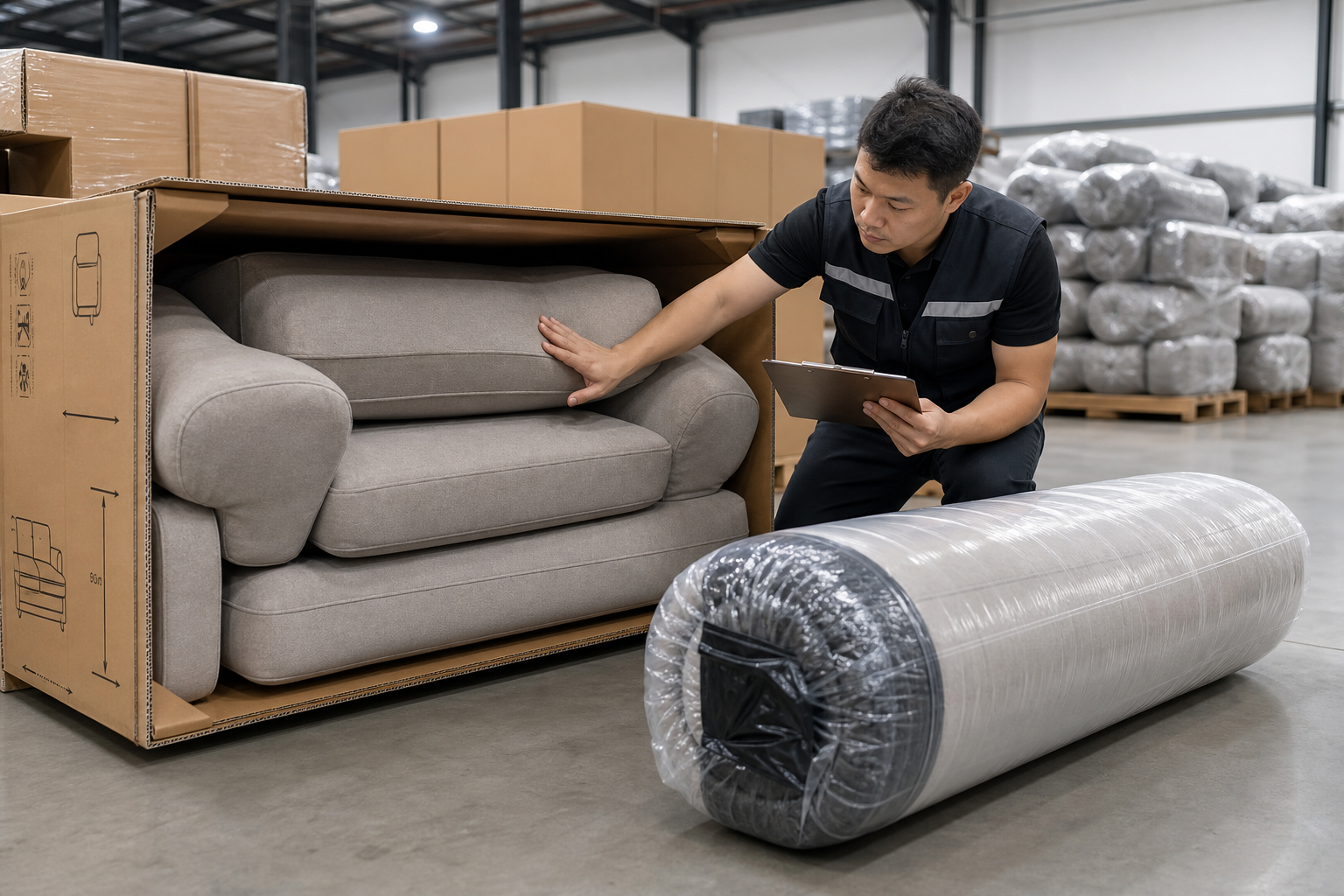
Packaging should be reviewed together with fabric, foam, seam pressure, carton strength, and warehouse handling. Request photos or video of the packed units, then confirm:
- final carton dimensions for the approved model and fabric;
- whether labels, inserts, or logo packaging change carton size;
- rebound checks at 24, 48, and 72 hours;
- creasing, seam-pressure, and upholstery recovery risks;
- edge protection and carton strength for transshipment.
Confirm factory and OEM controls
The OEM and ODM page should be part of the sourcing review because a repeat order may need fabric, color, size, label, barcode, carton, or unpacking-instruction changes. Ask whether a revision changes packed dimensions, rebound performance, foam density, or loading assumptions.
The key question is not whether a supplier can make one sample. It is whether the same specification can be held across the approved production run and the next order.
Turn the comparison into a container and procurement decision
Use the container loading page to confirm the final SKU mix, 20GP or 40HQ assumptions, unloading method, and recovery schedule. For U.S.-bound programs, keep CPSC guidance in the compliance review while the supplier confirms product labeling and safety communication.
Before deposit, request:
- approved product and packed-size sheet;
- carton volume and gross-weight list;
- container-loading calculation for the final mix;
- rebound and unpacking instructions;
- QC, packaging, and OEM revision controls.
When these facts are ready, use the MagiSofa contact page to send the RFQ with target models, quantity, destination port, fabric, and loading assumptions.
Need a compressed sofa sourcing check?
Send your target models, quantity, destination port, fabric and loading assumptions for a practical procurement review.
Conclusion
Price starts a compressed-sofa conversation, but packed size, material behavior, rebound, factory controls, and container math decide whether the program is reliable. Buyers who compare those facts together can reduce sourcing surprises and make the next supplier conversation more productive.