
A compressed sofa quote looks efficient on paper, but importers still lose margin when they approve a program before the packed dimensions, rebound timing, and loading plan are tied to the actual SKU mix. The safer way to review a compressed sofa in a box order is to compare live product parameters, material details, carton limits, factory controls, and destination handling requirements before the bulk booking is locked.

Start from the live assortment instead of a single sample quote
The first useful check is to anchor the discussion around the live compressed sofa collection. That keeps the sourcing review connected to real MagiSofa models rather than to generic assembled sofas that do not share the same compression method, packed size, or rebound profile.
Before an importer approves the order, the buying file should confirm:
- which models are planned as sectionals, lounge chairs, or sleeper pieces
- whether the destination warehouse receives floor-loaded cartons or palletized cartons
- the maximum carton dimensions and gross weight the team can unload without repacking
- how much rebound time is available before inspection, display, or dispatch
- whether the first PO is a trial container or a repeat replenishment program
That sequence helps buyers test the total landed result, not just the quoted unit price.
Compare product parameters before accepting any freight-saving claim
The compressed sofa L-shape fabric sectional gives a useful sectional benchmark with fabric upholstery, sponge filling, D35 seat foam, and a packed size near 55 x 55 x 112 cm at roughly 69 kg gross weight. Those specification points matter because they show how one larger seating format affects carton handling, CBM planning, and showroom readiness after unpacking.
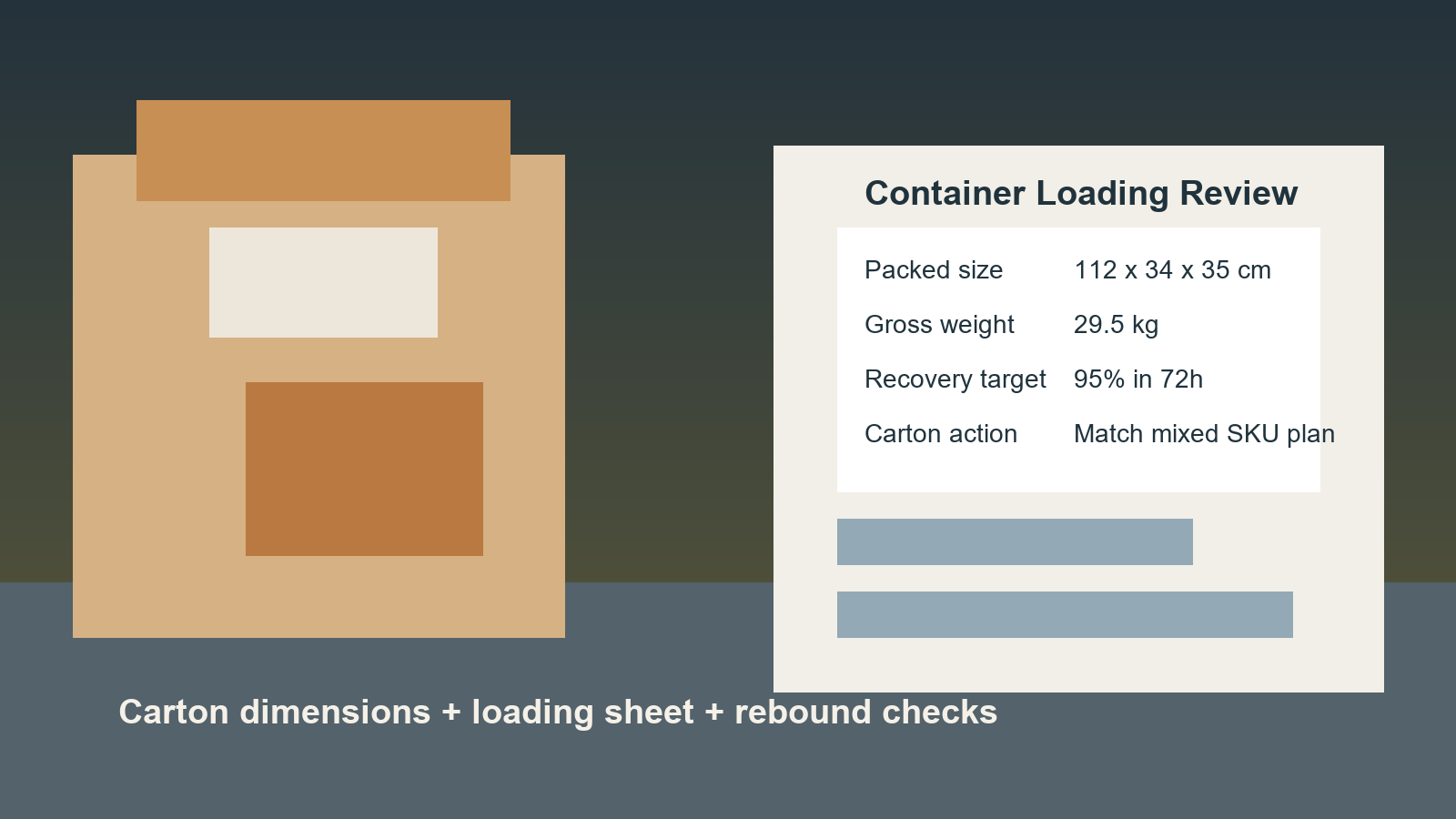
The LS1016 folding sofa bed covers the sleeper side of the program. Its published dimensions show a sofa size around 200 x 85 x 70 cm, flat size around 200 x 215 x 70 cm, packing size around 112 x 34 x 35 cm, gross weight around 29.5 kg, and carton volume near 0.133 CBM. That is the kind of product parameter detail buyers need when deciding whether a compressed sofa bed belongs in the same shipment as sectional models or should be costed as a separate assortment line.
Packaging math only works when the carton plan is documented
The compressed sofa vacuum pack shipping model gives the logistics benchmark many buyers ask for: vacuum-compressed roll-pack export packing, about 60% CBM reduction on suitable programs, up to 2.5 times more units in a 40HQ, and around 95% rebound within 72 hours after unpacking. Those numbers are useful only when they are checked against the final upholstery, foam structure, and mixed-SKU loading plan.
| Import review point | Detail to confirm | Why it matters |
|---|---|---|
| Carton fit | Packed size, carton count, gross weight | Confirms whether receiving and storage remain practical |
| Freight yield | CBM per SKU, mixed-model ratio, loading drawing | Shows whether savings survive the actual order mix |
| Recovery standard | Foam density, fabric tension, rebound timing | Protects resale readiness after decompression |
| Repeatability | MOQ, lead time, export packing consistency | Decides whether the first workable order can scale |
For execution, buyers should also review the live container loading support page and ask for the final loading sheet only after the fabric, carton, and model mix are fully approved.
Material details decide whether the sofa is still sellable after decompression
A compressed foam sofa is not just a freight exercise. Fabric type, sponge structure, foam density, seam tension, and inner wrapping all affect surface recovery after the carton is opened. If one SKU switches from a lighter fabric to a thicker upholstery or changes the foam build, the packed dimension and the rebound look can both move enough to change the landed result.
Import teams should ask for:
- rebound photos or inspection notes after 24, 48, and 72 hours
- confirmation that approved fabric changes do not alter packed size unexpectedly
- packaging details for corner protection, inner wrap, and carton strength
- pre-loading inspection photos that match the final approved assortment
- a record of which specification and material points are checked before release
These checks are what separate a workable sofa in a box compressed order from a container that looks efficient only at quotation stage.
Factory capability is what keeps sample data repeatable at shipment scale
The OEM and ODM sofa manufacturing page matters because repeat freight savings depend on repeatable factory controls. Buyers often need carton marks, barcode labels, care cards, mixed-SKU loading sheets, and project-specific packaging notes. If those steps are not controlled by the manufacturing team, the packed-size assumption used for the quote can drift before shipment.
Before deposit, the buyer should confirm:
- who signs off the final packed dimensions after fabric and foam approval
- whether barcode labels, carton printing, and inserts are handled in-house
- whether rebound checks and workshop inspection photos are recorded by batch
- whether sectional and sleeper models can share one controlled export packing process
- who approves the revised loading plan if the assortment changes late
For U.S.-bound upholstery programs, buyers can also review CPSC guidance while aligning labeling and compliance expectations with their destination market.
Close the RFQ with a real loading sheet and an inquiry-ready checklist
The cleanest final step is to lock the model shortlist, confirm each packed dimension, and send the RFQ only after the supplier has issued the carton and loading plan for the real order mix. If your team is comparing suppliers, include the final SKU split, destination port, unload limits, and rebound expectation in the inquiry so the quote is based on the same commercial assumptions.
The final checklist should cover:
- the approved models from the compressed sofa collection
- sectional and sleeper specifications checked against the quoted assortment
- carton size, CBM, gross weight, and rebound timing for each SKU
- loading confirmation from the container loading support page
- the final project inquiry through the MagiSofa contact page with port, quantity split, and carton constraints
That is the practical review path importers should use before booking a compressed sofa in a box program at scale.
Review your sofa in a box plan
Share your SKU mix, destination port, and carton limits for a quotation backed by product dimensions, rebound checks, and loading support.