
Football season creates a short, visible demand window for hotel lounges, apartment common rooms, and commercial viewing areas. For furniture importers, the useful question is not whether a space looks festive; it is whether a compressed sofa program can arrive in the right configuration, fit the loading plan, and still give guests durable, comfortable seating after recovery. A procurement plan should therefore connect seat layout, material approval, carton dimensions, and replenishment timing before the supplier starts bulk production.
Why football season changes lounge seating decisions
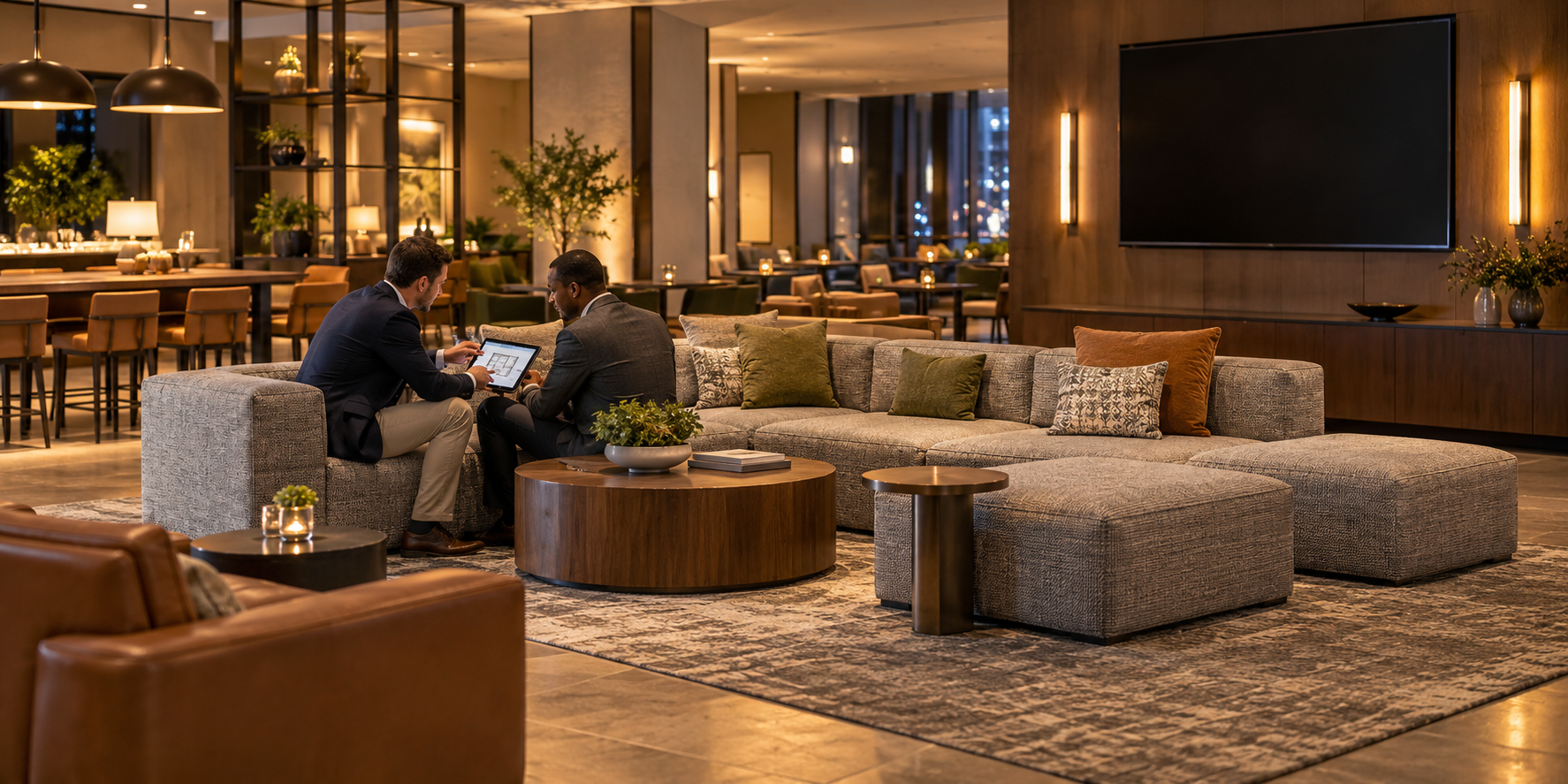
Hotels and sports lounges often need more flexible seating during a global football event: pairs can be grouped for smaller parties, sectional units can define viewing zones, and surplus seats can move to a lobby or apartment amenity room after the season. That makes the compressed sofa collection relevant to buyers who want to consolidate freight without committing to a fixed, oversized lounge layout.
The market signal is practical rather than promotional. A hotel may be replacing worn lobby seating ahead of higher guest traffic, while an apartment operator may be adding a shared viewing room. In both cases, procurement should begin with a seat-count plan, aisle clearance, and target delivery date. Ask the supplier to translate that layout into unit quantities and a container-loading estimate instead of approving a sofa solely from a lifestyle photo.
Start with recoverable comfort, not only compressed volume
A compressed sofa in a box needs a specification sheet that covers the product after unpacking, not only its carton. For a lounge proposal, request the overall size, seat depth, seat height, back height, arm width, and leg or base construction for every SKU. A common project review compares a straight two- or three-seat piece with a modular option, then checks whether the seating height is consistent across the final grouping.
Material detail matters just as much. Buyers should record the upholstery type and color code, foam density or grade, inner liner, zipper or closure method, and whether the cover is removable. For example, a soft corduroy or chenille-style upholstery may suit a relaxed viewing area, but the buyer should still confirm abrasion expectations, seam construction, and cleaning guidance for hospitality use. The vacuum roll-packed folding sofa bed is a useful product-page reference when comparing a compact guest-use format with a conventional lounge sofa.
Turn a room layout into a packaging and loading brief
Freight savings come from a verified packing plan, not from the word “compressed.” Ask for each model’s packed size in millimetres, gross and net weight, carton count per unit, pallet rule if used, and the compression or vacuum-packing method. These details let an importer test whether cartons can be received through hotel service doors, stored safely, and staged by installation zone.
For a mixed lounge order, the factory should issue a loading list that identifies cartons by model, color, and destination area. Buyers can then review the container loading support plan against the chosen container type and make sure the final cartons are not buried behind items needed first on site. Confirm the recovery window after opening, the ventilation instruction, and the person responsible for reporting a recovery or transit-damage issue. Those controls are especially useful when a project schedule leaves little time for replacement units.

Match the modular model to the operating scenario
One lounge does not need one sofa format. A linear compressed sofa can simplify wall-side seating; an L-shape can create a defined group-viewing corner; smaller modules can give a hotel team more freedom to reconfigure after a match night. Review the compressed L-shape fabric sectional with the same dimensions and packing questions used for the core seating plan.
Before placing the PO, create a small approval matrix: approved room layout, model code, finished dimensions, packed dimensions, fabric swatch, foam specification, carton marking, and target quantity. This stops a common sourcing error in which a visually similar sofa has different arms, package size, or joiner details from the approved sample. It also gives the importer a clean basis for inbound inspection and future reorder discussions.
Use factory capability as a procurement checkpoint
Football-season lounge projects benefit from a supplier that can manage repeatable configuration, not just send a sample. During supplier evaluation, ask how the factory controls fabric cutting, foam preparation, compression packing, carton labelling, and pre-shipment inspection. A buyer should use the MOQ of 500 units and confirm model and color requirements, sample lead time, bulk production lead time, spare-cover availability, and the photo or video checkpoints available before loading.
MagiSofa’s OEM and ODM sofa manufacturing capability is the appropriate conversation point for buyers who need a project-specific combination of upholstery, modular arrangement, and packaging. The practical aim is to lock dimensions and material details early enough that the production workshop can repeat them across the order. Do not treat “OEM” as a substitute for an approved specification: attach the signed product sheet, swatches, carton artwork, and loading instruction to the purchase order.
Build risk controls into the purchase order
Seasonal demand makes late changes expensive. Include an approval sample or clear pre-production sign-off, permitted tolerance for key dimensions, inspection method, carton drop or handling expectations where relevant, and a defect-report window after receipt. For U.S.-bound or U.S.-market projects, teams can also use the U.S. Consumer Product Safety Commission as a starting point for checking applicable furniture safety information; the importer remains responsible for confirming the requirements that apply to its market and product.
For the freight side, ask for a final packing list before dispatch and compare it with the approved loading plan. Confirm whether cartons require corner protection, moisture protection, or a mixed-load sequence. The best buyer practice is to reserve time for an opening-and-recovery check on arrival, photograph the results by carton label, and feed any issue back into the next container plan.
A practical pre-season sourcing sequence
Use a short sequence to keep the project decision-based. First, confirm the viewing-space layout and quantities. Second, approve dimensions, materials, and a physical or documented sample standard. Third, validate packed size, carton count, and container plan. Fourth, schedule production and inspection around the opening date. Finally, keep reorder models and color codes documented so the lounge can be expanded or refreshed without restarting the sourcing process.
This approach keeps football-season demand in the right place: it is a reason to plan earlier, not a reason to rush an unverified sofa order. A well-specified compressed sofa program can give hotel and sports-lounge buyers practical seating flexibility, clearer inbound handling, and a sounder basis for freight decisions. For a specification review or project quote, contact MagiSofa’s sofa team with the room plan, target quantity, and receiving deadline.
Plan Your Lounge Sofa Supply
Discuss compressed sofa specifications, OEM options, roll-packed delivery, and container planning for your hotel or commercial lounge project.