
Compressed sofa programs look simple on a quotation sheet, but the real project risk usually shows up later in freight cost swings, failed recovery after unpacking, inconsistent foam feel, or cartons that waste container space. For furniture importers, a reliable compressed sofa supplier needs to prove more than price. The supplier should show how the product is vacuum packed, how quickly it regains shape, how the cover and foam hold up across batches, and how the loading plan protects your margin when a shipment scales from sample order to full container.

Why compressed sofa projects go wrong after sampling
Many compressed sofa projects look acceptable in a showroom sample because the buyer is evaluating comfort first. The larger risk appears when the same item must survive vacuum compression, ocean transit, unloading, warehouse storage, and final retail delivery. A factory that cannot control rebound time, packaging pressure, and carton dimensions will create downstream problems even if the sofa looked fine on day one.
This is why importers should ask for evidence tied to the actual shipment model. A reference product such as the compressed sofa vacuum pack shipping model is useful because it shows how the factory approaches compression efficiency rather than only styling.
The packaging questions that protect your container economics
For a compressed sofa order, packaging is not a back-office detail. It is part of the product engineering. Buyers should confirm:
- The final carton size after compression and sealing.
- The rebound window required before inspection or showroom use.
- Whether the foam structure is tuned for vacuum recovery instead of only softness.
- How many units fit into a 40HQ container with realistic loading allowances.
- Whether corner protection and inner wrapping reduce fabric damage during handling.
When those answers are vague, container planning becomes guesswork. This is especially risky for a compressed sofa in a box strategy where retailers expect consistent carton dimensions for storage, distribution, and last-mile handling.
How to evaluate product fit across styles
Importers often need more than one silhouette, so the supplier should prove that its compression method works across different constructions. A lounge-chair style like the compressed sofa rose pink lounge chair helps buyers review shape retention, seam cleanliness, and cover finish after recovery. A softer casual model such as the compressed sofa frameless flocking chair is useful for checking whether a compressed foam sofa still delivers stable seating feel after transit.
Looking across multiple builds also helps buyers understand whether the factory is selling a real compressed sofa bed or sofa in a box compressed capability, or simply adapting a standard product for one-off samples.
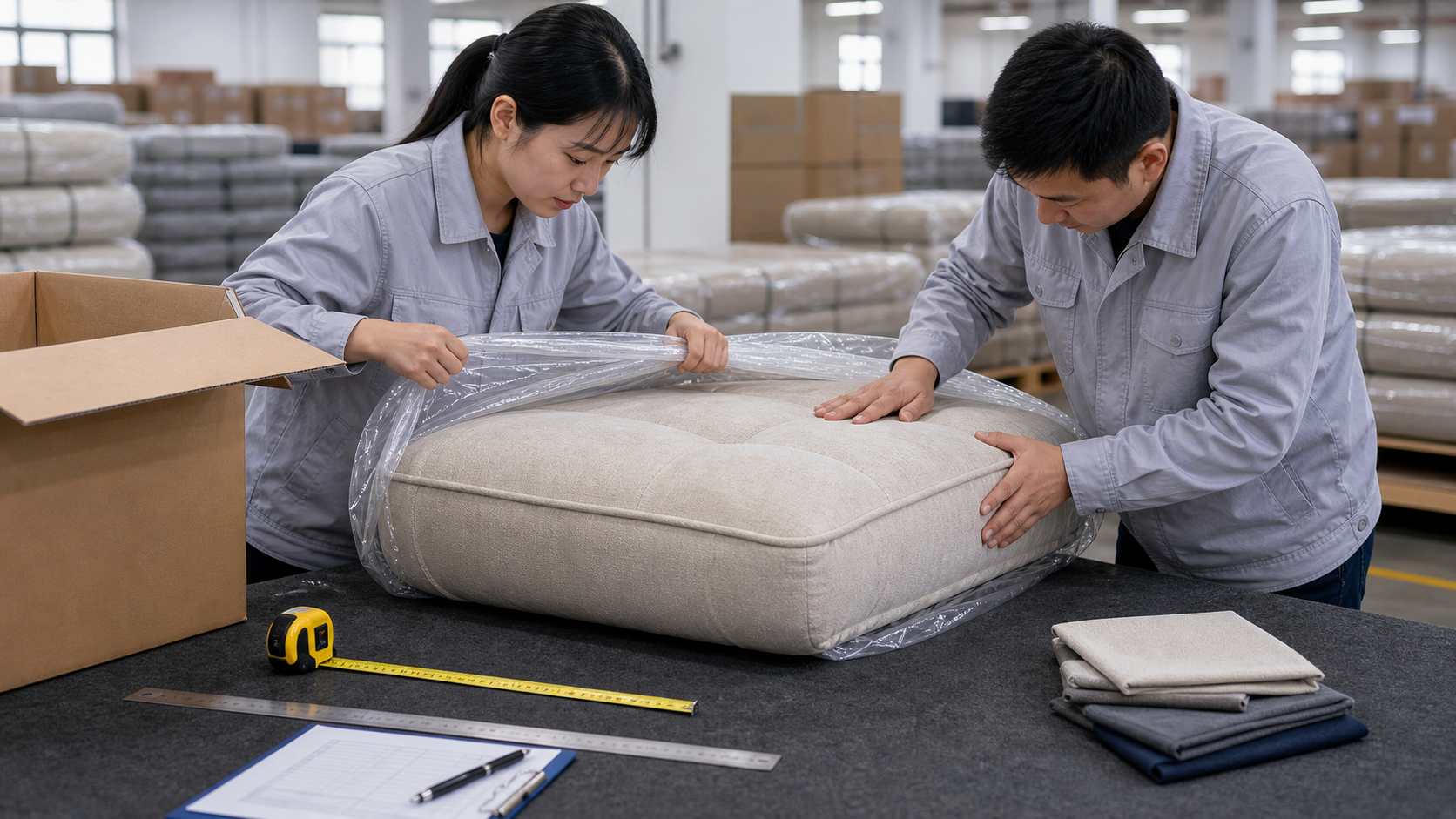
What a buyer checklist should cover before PO approval
Before approving production, furniture importers should request a checklist that covers:
- foam density targets and tolerance ranges
- fabric or cover material consistency by batch
- vacuum compression dwell time
- rebound inspection timing after unpacking
- carton drop or handling protection measures
- loading plan by container type
- photo or video evidence from recent shipment packing
This checklist matters because a compressed sofa bed or modular seat can pass comfort testing but still fail commercial requirements if it recovers unevenly or consumes too much logistics volume.
Compliance and trust signals still matter
Risk control is not only about packaging. Buyers should also look for suppliers that can align with the destination market’s safety and product-compliance expectations. For U.S.-bound programs, it is reasonable to reference CPSC furniture safety guidance when discussing labeling, consumer-use expectations, and general safety awareness during product planning.
An external authority link should support the sourcing conversation, not replace factory evidence. The main point is that your supplier should understand how compliance questions affect materials, documentation, and customer communication before the order ships.
A practical sourcing decision framework
When choosing a compressed sofa supplier, buyers can reduce project risk by scoring each candidate on four points:
- Compression performance: Does the sofa recover predictably after unpacking?
- Container efficiency: Are carton size and loading plans clearly documented?
- Style repeatability: Can the factory apply the same process across multiple models?
- Execution discipline: Are materials, inspection timing, and shipment controls consistent?
If a supplier cannot explain these points with sample evidence, loading data, and product references, the lower quote is usually not the lower landed risk.
Conclusion
Compressed sofa sourcing works best when buyers treat packaging, rebound performance, and loading efficiency as core buying criteria rather than final-stage details. For furniture importers, the strongest supplier is the one that can connect comfort, compression, and container math into one dependable delivery process. That is the difference between a sample that looks good and a program that scales cleanly.