
Many buyers say they are sourcing a compressed sofa when they are really comparing only photos, target price, and one broad freight promise. That shortcut creates avoidable risk. For furniture importers, the real decision has to include product dimensions, material details, carton planning, rebound timing, and whether the factory can support mixed loading and customization without disrupting delivery. This matters even more when the sourcing team is comparing compressed sofa in a box, compressed sofa bed, sofa in a box compressed, and compressed foam sofa programs that look similar online but behave very differently once the order reaches production.
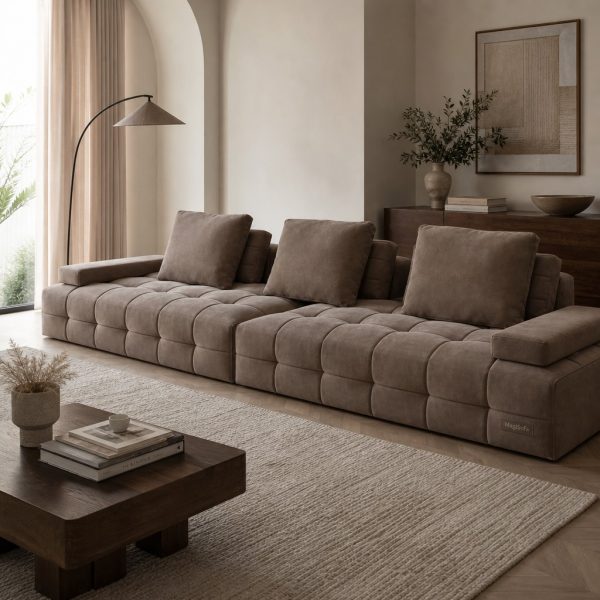
Start with a compressed sofa collection, not one attractive sample
The safest first step is to review the full compressed sofa collection and build a comparison table before asking for a quote. Importers often move too quickly from one sample image to a price conversation, which leaves critical specification gaps unresolved.
At minimum, the comparison sheet should confirm:
- finished product size after rebound
- packaging dimensions and gross weight per carton
- upholstery, foam density, and frame or structure notes
- estimated container-loading gain versus assembled sofas
- MOQ, lead time, and customization scope
When those five lines are missing, the buyer is not choosing a stable compressed sofa program. The buyer is only choosing a marketing angle.
Product data must show measurable packing value
One strong benchmark is the YS028 compressed sofa L-shape fabric sectional. It gives importers real published values instead of vague claims:
- model number: YS028
- material: fabric upholstery with sponge filling
- seat foam: D35
- packaging dimensions: 55 x 55 x 112 cm per single packed unit
- gross weight: 69 kg
- packaging method: vacuum-compressed roll-pack with reinforced outer carton
- CBM reduction: about 60% versus conventional assembled sofas
- container capacity gain: up to 2.5x more units per 40HQ
- rebound rate: at least 95% within 72 hours after unpacking
- warranty: 3 years
Those numbers matter because they connect visual product appeal to warehouse and freight planning. A sectional may look right for a hotel lounge or apartment project, but an importer still needs to know whether the carton can move through the receiving process, whether the 69 kg package fits the unloading plan, and whether the D35 seat foam matches the target market’s comfort expectation.
Importers also miss format-specific checks on sleeper models
The LS1016 folding sofa bed shows why a compressed sofa bed should not be evaluated like a standard lounge sofa. Its published values are more specific:
- product size: 200 x 85 x 70 cm
- lying-flat size: 200 x 215 x 70 cm
- packing size: 112 x 34 x 35 cm
- material: checked velvet fabric
- gross weight: 29.5 kg per carton
- carton quantity: 1 piece per carton
- CBM per carton: 0.133
- estimated 40HQ container capacity: 503 units
- MOQ: 500 units
- lead time: approximately 45 days
For importers, this is practical procurement advice, not filler content. If the project needs both lounge seating and occasional sleeping function, the team has to verify the lying-flat footprint, carton count, and lead time before combining the model with a sectional shipment. Otherwise, the sourcing plan can fail on container mix, not on product quality.

Materials and rebound performance need to be reviewed together
Another common mistake is to review material details separately from packaging performance. The compressed sofa vacuum pack shipping model keeps those two points connected. The product highlights high-density foam with an upholstered fabric cover, vacuum-compressed roll-pack packing, about 60% CBM reduction, up to 2.5x more units per 40HQ, and a rebound rate of at least 95% within 72 hours.
That combination matters because a material choice is only useful when it survives the packing method. Importers should ask:
- whether the selected fabric and foam can hold shape after compression
- whether rebound checks are recorded at 24, 48, and 72 hours
- whether outer-carton reinforcement is standard or optional
- whether certifications or market documents can be aligned to the final order specification
For U.S.-market programs, buyers should also keep CPSC guidance in the compliance review while confirming the final material and packaging specification.
Factory capability is part of product qualification
A compressed sofa quotation is incomplete if it does not include factory capability details. The OEM and ODM sofa manufacturing page matters because importers often need more than a standard catalog model. They may need carton-label changes, fabric substitutions, logo placement, private-label packaging, mixed-model loading, or project-specific documentation.
Before approving a supplier, the buyer should confirm:
- which dimensions can be adjusted without damaging compression performance
- whether the factory supports OEM or ODM development for fabric, label, and packaging
- how production milestones are managed across sampling, approval, and mass production
- whether mixed-container planning support is included for multi-model orders
- how the factory handles rebound claims or collapse-compensation issues after delivery
These are factory capability checks, but they directly affect landed cost and project timing.
Container loading pages should be treated as purchasing tools
Importers also underestimate how much value sits in the container loading support page. Loading and shipping data are not secondary content. They are part of the sourcing decision because carton dimensions, stack method, and loading order can change the real per-unit freight cost.
A proper loading review should cover:
- final carton dimensions for every approved SKU
- carton gross weight for warehouse handling
- whether sectionals and sleeper units can share one export plan
- labeling for room allocation or customer SKU control
- rebound timing after unpacking at destination
This is where many importers discover that two compressed sofa models with similar pricing can perform very differently in a live container plan.
A better compressed sofa buying workflow
If the goal is to reduce sourcing risk, the buyer should use a repeatable process:
- shortlist models with real dimensions, material details, and packaging data
- compare sectional, sleeper, and standard vacuum-pack options side by side
- verify MOQ, lead time, and customization scope before price approval
- review container loading assumptions before deposit payment
- lock the final specification and project questions through the contact page
That workflow keeps the article topic honest: buyers do not miss compressed sofa value because the product is unclear. They miss it because they treat packaging, material, and factory execution as follow-up questions instead of core selection criteria.
Conclusion
What importers miss when choosing compressed sofa models is usually not the sofa itself. It is the connection between product parameters, packing dimensions, material behavior, factory support, and container-loading execution. Buyers who review those five areas together can make better use of compressed sofa programs for wholesale, project supply, and long-distance distribution.
For a faster evaluation path, compare the compressed sofa collection, review the YS028 sectional, the LS1016 folding sofa bed, and the vacuum pack shipping model, then contact MagiSofa for OEM / ODM options, roll-packed sofa solutions, and container-loading support.