
When a sourcing team compares a compressed sofa quote, it usually checks unit price first and loading logic second. That order creates avoidable freight risk. Furniture importers still miss the real differences between suppliers when packed size, carton count, rebound timing, and factory loading controls are buried in separate files instead of one review. A usable buying decision needs product dimensions, material details, packaging data, and a repeatable export plan in the same conversation.
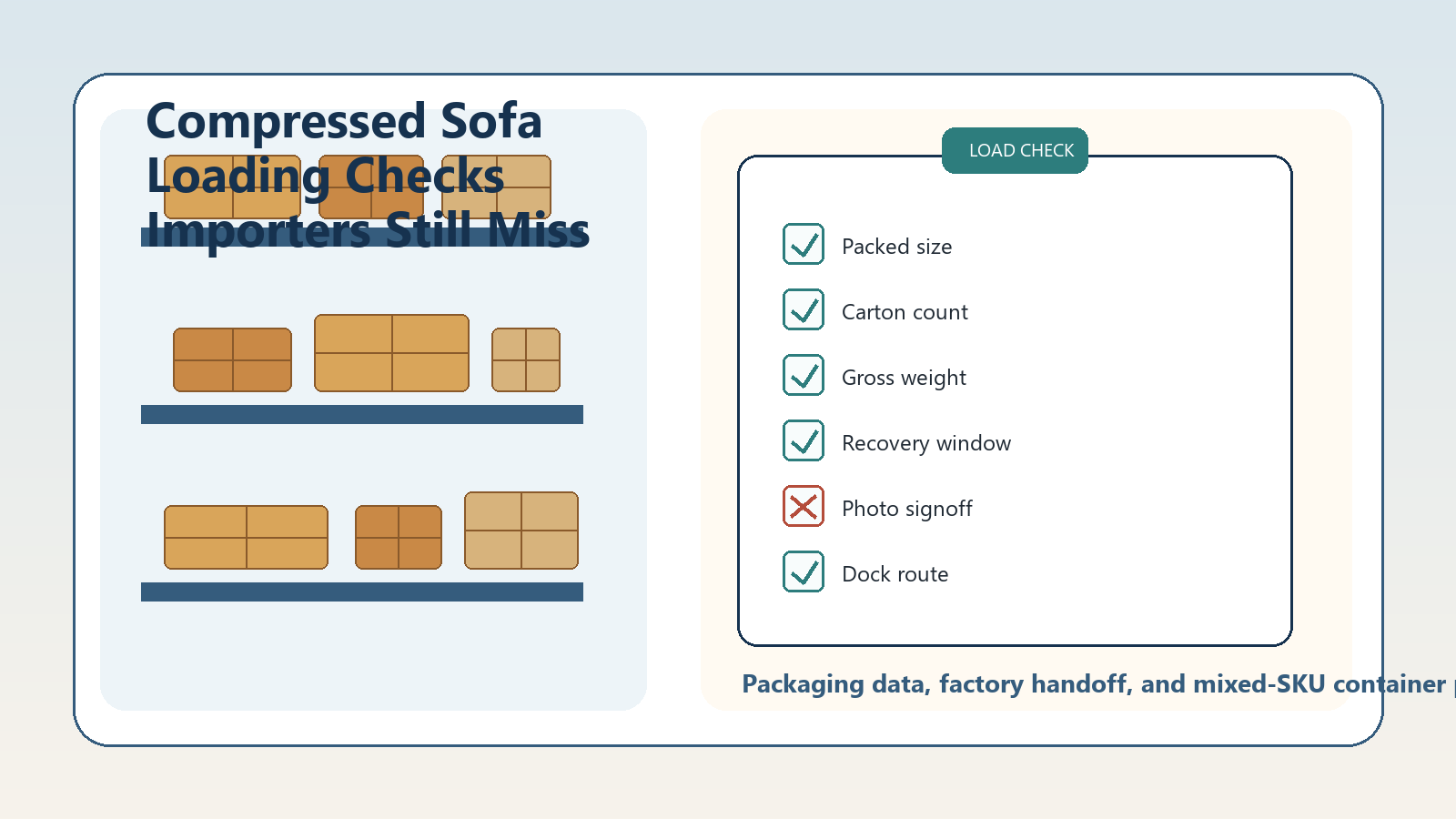
Match the sofa mix to the destination handling plan
Importers should define where each sofa will move before asking for the final quote. A project may need one SKU for a warehouse club display floor, another for apartment distribution, and another for a hotel lounge or reseller program. That matters because a compressed sofa in a box order is only efficient when the carton size, receiving route, and unloading sequence fit the destination operation.
The easiest baseline is the live compressed sofa collection. It helps buyers compare sectional seating, compact lounge models, and sleeper-capable pieces under one compressed-shipping program instead of mixing random residential references into a B2B procurement review. Start the RFQ with destination port, final delivery route, lift or dock limits, and expected storage time so every supplier is quoting against the same logistics brief.
Compare packed dimensions before you compare landed cost
Many buyers still compare FOB price before they compare packed dimensions. That is backwards. The compressed sofa vacuum pack shipping model is a useful reference because MagiSofa positions it around vacuum-packed export handling instead of show-room styling alone. Buyers should ask for final size, packed size, carton count, gross weight, and CBM on the exact approved SKU rather than a generic specification sheet.
The LS1016 folding sofa bed gives importers a concrete benchmark: sofa size 200 x 85 x 70 cm, flat size 200 x 215 x 70 cm, packing size 112 x 34 x 35 cm, 29.5 kg gross weight, 1 piece per carton, and about 0.133 CBM. For larger common-area layouts, the compressed sofa L-shape fabric sectional adds another specification point with fabric upholstery, sponge filling, D35 seat foam, and a packed size of 55 x 55 x 112 cm at about 69 kg gross weight. Those numbers are what let an importer test container fill and last-mile handling, not just compare appearance.
| Import review point | Product detail to confirm | Packing detail that changes freight cost | Risk if the supplier stays vague |
|---|---|---|---|
| Sleeper-capable orders | Sofa size, flat size, velvet upholstery, sponge structure | 112 x 34 x 35 cm, 29.5 kg, 1 carton, 0.133 CBM | Landed-cost math and warehouse allocation stay unreliable |
| Sectional lounge orders | Fabric upholstery, D35 seat foam, sectional layout | 55 x 55 x 112 cm, about 69 kg gross weight | Cartons may not fit the real dock, lift, or staging path |
| Vacuum-packed export orders | Approved model size and carton count by SKU | Final package size, carton marks, loading sequence | Freight quote looks low until the final packing sheet arrives |
Check material recovery and packaging together
Material review should happen with packaging review, not after it. A compressed foam sofa may save CBM, but the buyer still needs to know how the fabric, foam, stitching, and upholstery behave after unpacking. Ask what rebound window the factory expects, what level of surface creasing is normal after vacuum compression, and whether fabric changes alter the package dimensions or carton weight.
This is where real material terms matter. The LS1016 reference uses checked velvet, while other MagiSofa models use fabric or corduroy upholstery depending on the application. Importers should confirm foam density, fabric code, seat specification, and acceptable recovery condition before approving bulk production. If the supplier cannot explain how the material behaves after compression, the quote is not ready for PO approval even if the freight saving looks attractive.
Ask the factory who controls the loading handoff
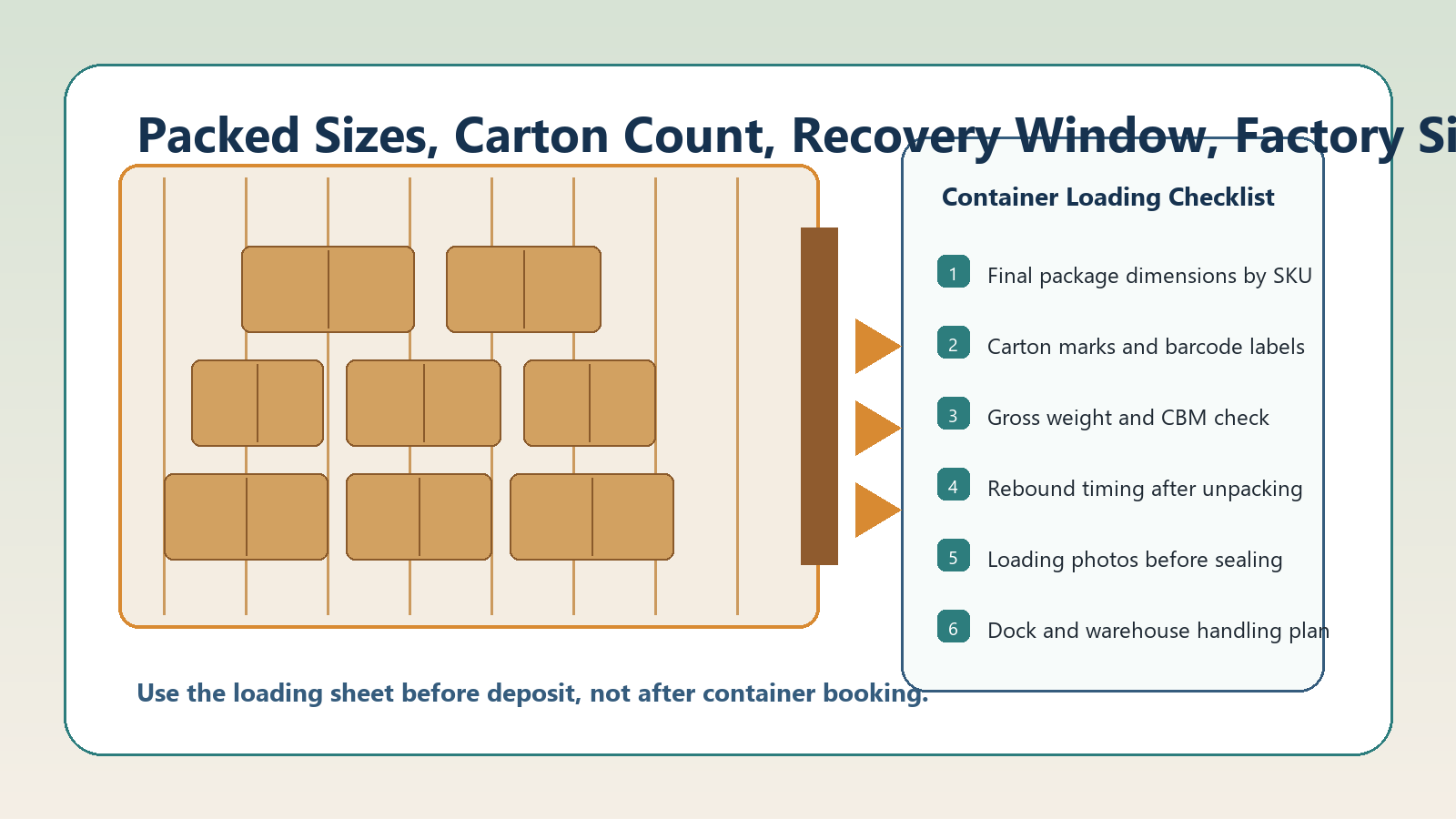
Loading problems usually come from factory-process gaps, not from the container itself. Buyers should ask the OEM and ODM manufacturing team who approves the final carton specification, who checks barcode labels and carton marks, and who signs off on pre-loading photos. That separates a factory with a repeatable export workshop process from a factory that only has a strong sample room.
The sourcing checklist should cover production planning, packaging review, and loading ownership together:
- Which workshop or line confirms the final package dimensions after material approval?
- Who reviews carton print, barcode label, and shipping mark before sealing?
- Can the factory keep the same foam, upholstery, and packed size across repeat orders?
- Will the supplier provide loading photos and pallet or loose-load instructions before container booking?
- Who approves any change that affects the export carton or warehouse handling plan?
Those questions turn a sofa compressed conversation into a real factory capability review instead of a price negotiation only.
Review mixed-SKU container loading before deposit
The container-loading support page should be part of the sourcing file before deposit is paid. Importers often book one mixed order with sectionals, sleepers, and compact modules, then realize later that the loading sequence, carton orientation, or warehouse unloading plan was never confirmed. That creates avoidable receiving delays.
For a practical B2B review, ask for a mixed-SKU loading sheet that lists model code, package size, carton quantity, gross weight, and container position logic. If one supplier says a compressed program can reduce CBM by about 60% or increase a 40HQ count, treat that as a checkpoint that must be tied to the approved model mix and final carton dimensions. The loading claim only matters when the factory can show how the order will actually be packed, loaded, and received.
Build an importer checklist before final approval
Before the PO is released, the importer should confirm six items in writing:
- the approved finished dimensions and seat specification for each SKU
- the final packed size, carton count, gross weight, and CBM per model
- the material, fabric, foam density, and recovery window after unpacking
- the factory contact who signs off on production and loading photos
- the label, carton-mark, and barcode requirements for the destination buyer
- the destination-market compliance review, including CPSC guidance when the goods are U.S.-bound
This checklist is practical because it forces the supplier to confirm the points that most often change freight cost and receiving performance after sample approval.
Turn the quote into a loadable compressed-sofa order
Importers get better results from a compressed sofa bed or sectional sourcing program when they compare logistics and product data at the same time. The best quote is the one that can survive the full path from factory loading to destination unloading without hiding carton assumptions. If your team is reviewing a new compressed-sofa order, contact MagiSofa with your target market, SKU mix, destination port, and warehouse-handling limits so the quotation is built on real packaging and loading data.
Review your loading plan
Share your SKU mix, destination port, and warehouse limits for a compressed sofa loading review with packed-size checks and factory handoff details.