
A compressed sofa can solve space and freight problems for a hotel lounge, yet buyers still struggle when a football-season deadline turns a normal furniture order into a fixed-date project. The common mistake is comparing appearance and unit price before locking room dimensions, recovery time, carton data, material performance, and the receiving plan.
The right starting point is the compressed sofa collection, followed by a model-by-model technical comparison. Published figures are useful benchmarks, but every project purchase order should carry the approved sample specification and final packing sheet.
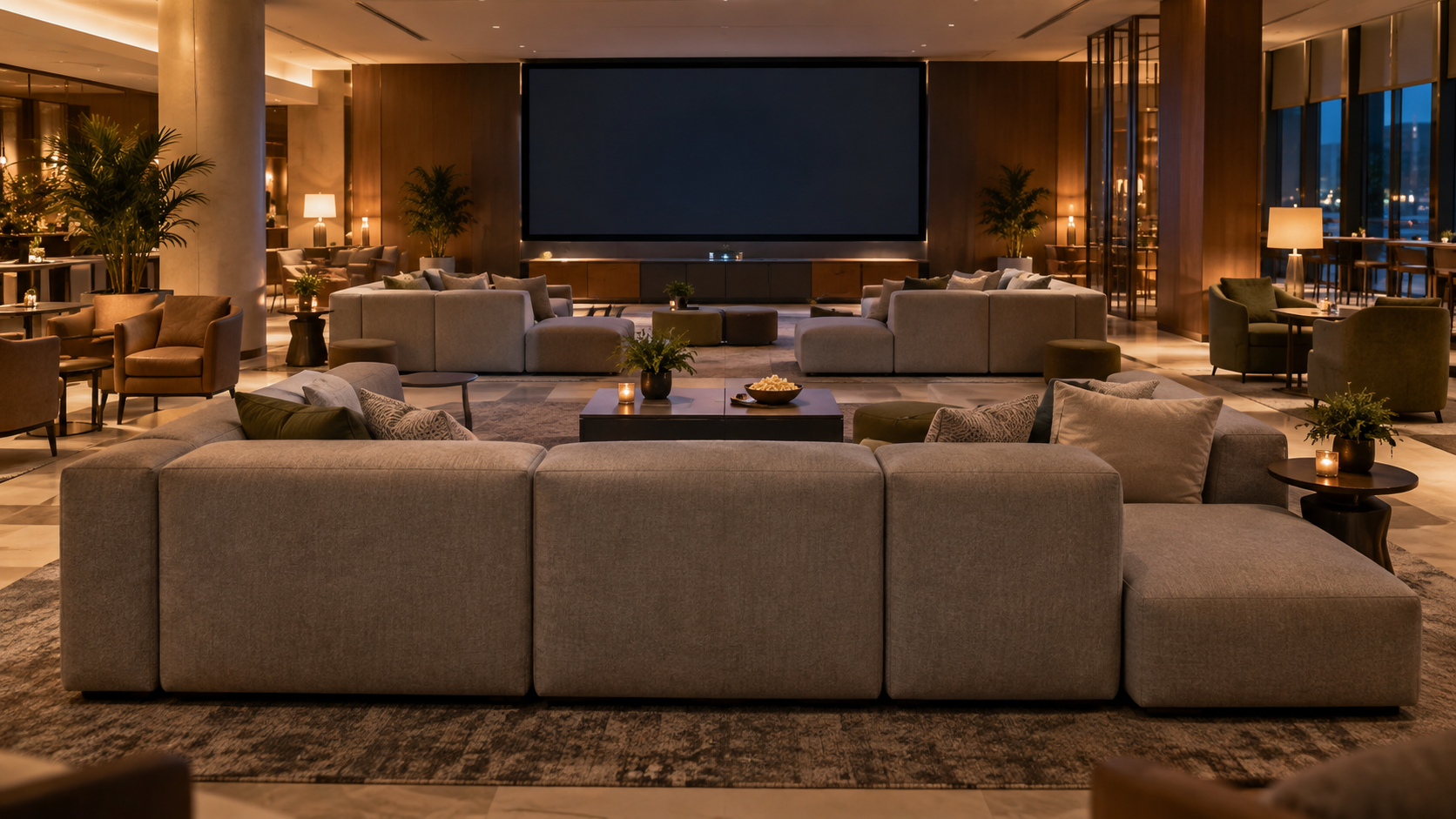
Why does the hotel use case change the sofa specification?
A matchday lounge has different operating demands from a private living room. Procurement should confirm the expected seats, viewing distance, aisle width, fire-exit clearance, housekeeping route, lift and doorway limits, and whether modules must move between a bar, lobby, meeting room, and temporary viewing zone.
Define the finished width, depth, height, seat height, seat depth, module weight, connector method, and sleeper clearance before requesting a quote. The LS1016 folding compressed sofa bed is a useful published reference: 200 x 85 x 70 cm in sofa mode and 200 x 215 x 70 cm when opened flat. That footprint can work for flexible hospitality areas, but the hotel still needs a scaled layout and an access-path check.
Which parameters should hotel buyers compare first?
Ask every shortlisted supplier to return the same data sheet. It should include finished and packed dimensions, net and gross weight, foam density and firmness tolerance, cover composition, removable-cover details, abrasion and colorfastness test basis, carton grade, unit CBM, recovery instructions, and production lead time.
| Buying checkpoint | Published model reference | Hotel procurement action |
|---|---|---|
| Finished size | LS1016: 200 x 85 x 70 cm | Validate lounge plan, lift, door, and aisle access |
| Sleeper size | LS1016: 200 x 215 x 70 cm | Reserve full opening clearance where sleeper use is planned |
| Carton size | LS1016: 112 x 34 x 35 cm | Check receiving dock, trolley, and storeroom limits |
| Gross weight | LS1016: 29.5 kg | Define a safe two-person or assisted handling method |
| Unit volume | LS1016: 0.133 CBM | Recalculate freight from the final SKU and color mix |
Do not apply these LS1016 values to another model. A change in width, foam build, upholstery, accessories, or carton protection can alter recovery, weight, and loading quantity.
How should materials and recovery be approved?
A hotel compressed foam sofa must recover predictably and withstand frequent guest use. The vacuum-pack shipping model describes high-density foam, upholstered fabric covers, vacuum-compressed roll packing, up to 60% CBM reduction versus conventional assembled sofas, and at least 95% recovery within 72 hours. Treat these as model-specific published claims to verify with the ordered construction.
Approve physical fabric and foam samples, not screen colors alone. Record fabric composition, GSM, abrasion-test basis, colorfastness, seam and zipper construction, foam density, firmness tolerance, odor requirement, and cleaning method. For a US-bound program, CPSC guidance is an authority starting point; the importer must still confirm all applicable flammability, labeling, and market requirements for the final product.
Run a production-representative recovery test. Measure the sofa immediately after opening and again at 24, 48, and 72 hours. Photograph corners, seat height, back shape, seams, and any persistent deformation. Hotels should also test the approved cleaner on the exact fabric and confirm that repeated moving does not open module joints.

Which packing details prevent a difficult hotel installation?
The purchase order should state whether the compressed sofa in a box is rolled or folded, the inner moisture and abrasion protection, outer carton grade, carton dimensions, gross weight, carton marks, barcode location, accessory location, maximum compressed-storage period, and unpacking instructions.
Ask the factory for one complete production carton before mass packing. The receiving team should test whether it fits the dock, service lift, corridor, guest-area doorway, and temporary storage rack. A technically efficient carton can still create labor and damage costs if staff cannot move it safely or identify the correct lounge zone without opening it.
For phased installation, require room or zone codes on the carton and packing list. Confirm which team opens the packages, where the sofas recover for up to 72 hours, and how packaging waste will be removed without blocking hotel operations.
What factory controls protect a fixed football-season opening?
The MagiSofa OEM and ODM process covers size and color adjustment, fabric selection, private-label packaging, instruction manuals, sampling, testing, production, inspection, and shipping. Buyers should convert those capabilities into dated approval gates rather than treating “OEM available” as sufficient evidence.
Require a signed specification, golden sample, approved production carton, material booking date, pre-production meeting record, inline inspection, final random inspection, recovery-test record, and loading photos. Ask which production line will make the order, its planned daily capacity, who owns corrective actions, and how replacement units will be handled if inspection fails.
Build schedule buffer around material approval, sample recovery, packaging retest, vessel cut-off, customs clearance, and hotel installation. A late sofa compressed shipment has little commercial value if it arrives after the high-demand viewing period.
How should the container and landed cost be verified?
The container loading page gives a model-level reference of 210 LS1016 pieces in a 20GP and 503 pieces in a 40HQ, based on the published 0.133 CBM carton. Use this reference for LS1016 only. Mixed models, colors, spare units, or revised cartons require a new loading diagram.
The final plan should show carton count by SKU, carton dimensions, unit CBM, gross weight, orientation, loading sequence, moisture protection, door clearance, and unused-space allowance. Compare theoretical CBM with a physical loading trial or a verified three-dimensional plan.
Hotel buyers should calculate landed cost per usable seat, including ocean freight, handling, inspection, recovery space, installation labor, damaged-carton allowance, and spare units. The lowest factory price or nominal freight rate may be more expensive after slow recovery, mislabeling, or a rushed installation is included.
What belongs in the final procurement approval file?
Before releasing the deposit or balance, assemble one controlled file containing the signed model specification, room plan, material sample codes, test evidence, carton specification, artwork, recovery instructions, inspection standard, production schedule, loading plan, shipping documents, and responsible contacts.
Use this final sequence:
- approve the room layout and access path;
- approve the physical sofa, foam, and fabric samples;
- approve the production carton and recovery test;
- verify factory capacity and dated inspection gates;
- verify the SKU-level container plan and landed cost;
- submit the confirmed brief through contact MagiSofa.
Plan Your Hotel Lounge Sofa Order
Share your lounge layout, model mix, destination, timing, and packing limits for a project-specific compressed sofa and container review.