
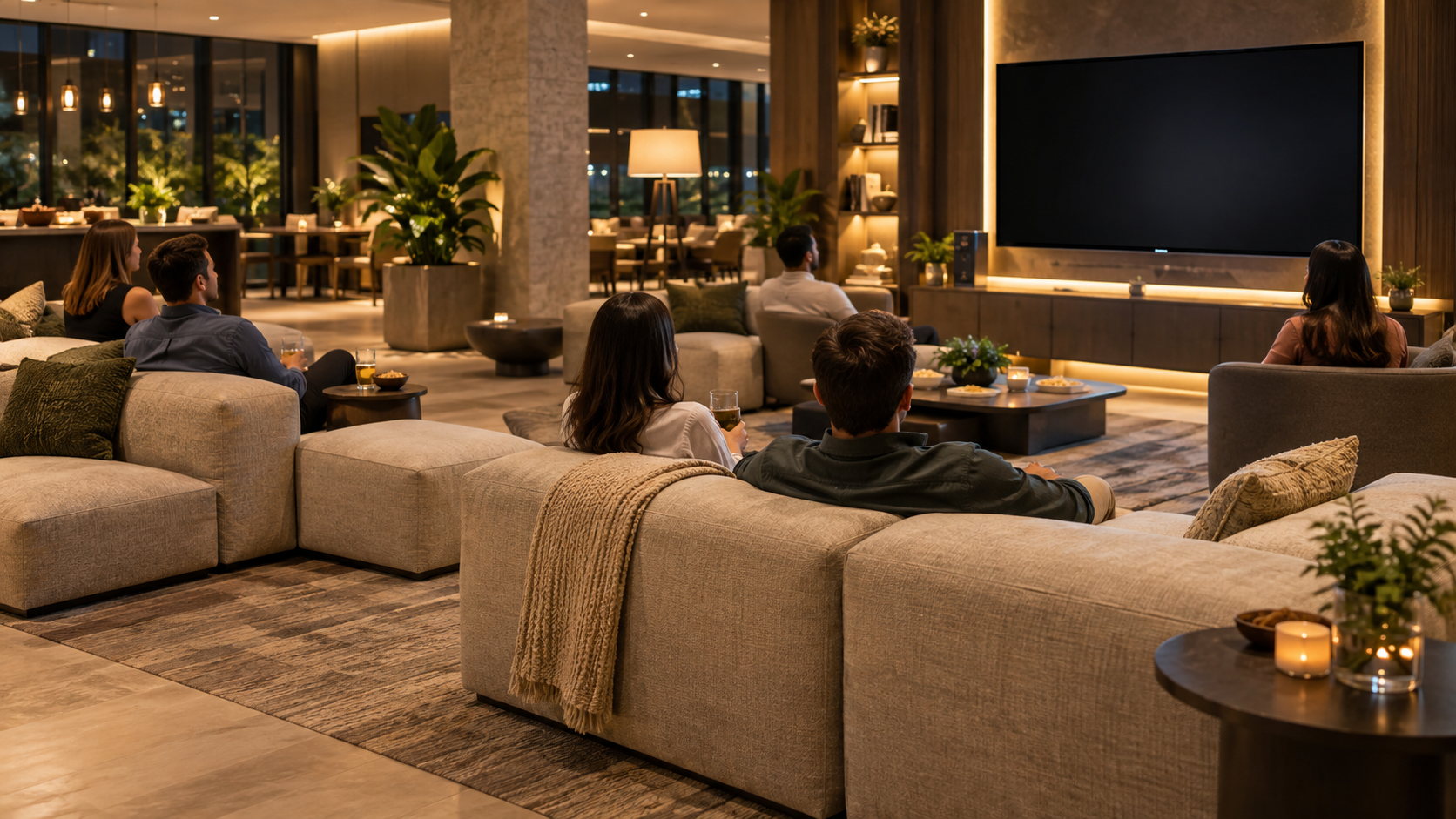
Hotel football-season lounges create a short, visible demand peak: seating must arrive on time, fit the room, recover correctly after unpacking, and withstand repeated guest use. A compressed sofa can simplify delivery through service corridors and reduce shipment volume, but only when buyers control the product specification, fabric, packing method, recovery test, and loading plan as one procurement package.
Plan a Hotel Lounge Sofa Program
Share your room plan, destination, quantity, fabric brief, and delivery date for a model-based sourcing review.
Translate the viewing season into a room brief
Start with the operating scenario, not a catalogue photo. Record the usable floor area, viewing direction, entrance and lift dimensions, required seats, circulation width, cleaning routine, installation window, and whether modules must be rearranged between group viewing and normal lounge service. The compressed sofa collection helps buyers shortlist sofa-bed, lounge-chair, modular, and sectional formats without assuming that one construction suits every zone.
For a hotel project, the specification should state open width, depth and height; seat height and depth; module connection method; net and gross weight; upholstery composition; foam construction; colour standard; fire or chemical requirements for the destination; and the acceptance tolerance. Confirm every field on an approved sample before mass production. A vague request for a “compressed foam sofa” is not enough to control comfort, fit, or repeat orders.
Compare real model parameters before setting the layout
Use model data to test the room plan. The LS1016 folding compressed sofa bed is listed at 200 × 85 × 70 cm when open, with checked velvet upholstery subject to the approved swatch. Its published export reference is one piece per carton, 112 × 34 × 35 cm, 29.5 kg gross weight, and 0.133 m³ per carton. Those figures make it suitable for a measurable comparison, but the flat configuration, final fabric, and current technical drawing still require approval for the order.
For flexible group layouts, compare that format with a corduroy compressed lounge module. Buyers should request the current open dimensions, seat measurements, packed size, gross weight, foam schedule, joining detail, and recovery record for the chosen module rather than transferring LS1016 data to another model. Product names such as compressed sofa in a box or sofa in a box compressed describe a logistics concept, not interchangeable specifications.
Match materials to hotel cleaning and recovery needs
Fabric approval should include composition, weight or construction, colour reference, abrasion requirement, stain-cleaning method, backing, seam performance, and a signed swatch. Checked velvet may suit one design direction; corduroy or another upholstery may suit a casual sports lounge. The buyer must confirm the actual material against the hotel’s cleaning chemicals, expected use, local compliance requirements, and replacement strategy.
Foam information should identify each functional layer, its density or other agreed performance measure, and the zones that support sitting, sleeping, edges, or backrests. Because compression changes the product temporarily, test the production-intent foam, fabric, inner bag, compression setting, carton, and storage duration together. Record shape, dimensions, seams, and cover tension immediately after unpacking and after the supplier’s stated recovery period. MagiSofa notes that recovery can take several hours to 24–48 hours depending on model, foam structure, packing method, and environment; project schedules should leave conditioning time before the lounge opens.
Build carton and loading data into the delivery plan

Packed dimensions affect freight, warehouse space, corridor access, lifting, and installation labour. The LS1016 reference carton of 112 × 34 × 35 cm is published at 0.133 m³ and up to 503 pieces in a 40HQ, subject to the final carton and loading plan. This is a model-specific reference—not a promise for a mixed order. The container loading process also lists distinct carton sizes and quantities for other models, showing why buyers should not apply one multiplier to every compressed sofa bed or lounge module.
| Control point | Evidence to approve | Hotel project decision |
|---|---|---|
| Open product size | Technical drawing and measured sample | Room fit and seat count |
| Material build | Signed fabric swatch and foam schedule | Cleaning, comfort, and recovery |
| Packed size | Sealed carton measured on all three axes | Freight, access, and storage |
| Recovery | Timed photo and measurement record | Installation buffer before opening |
| Loading | Model-mix carton plan | Purchase quantity and landed cost |
Ask whether individual cartons or bulk bags are proposed. Individual cartons support labelling, protection, and distributed handling; suitable bulk-bag packing can prioritize volume for large project deliveries. Confirm carton marks, room or floor codes, manuals, spare-cover handling, and unloading sequence before booking freight.
Audit factory capability before the seasonal deadline
A football-season deadline magnifies any late material change or failed recovery test. Review the supplier’s OEM and ODM sofa manufacturing process: requirement confirmation, design review, sample, testing, mass production, inspection, and shipping should create traceable approval gates. Ask who controls fabric purchasing, foam cutting, sewing, compression settings, carton checks, final inspection, and change authorization.
The factory file should connect the approved sample to a bill of materials, colour and fabric standard, carton drawing, label artwork, inspection checklist, production schedule, and shipment plan. Arrange pre-production and shipment inspections around measurable tolerances. For destination-market safety, use qualified compliance advice and match reports to the exact model and materials; the U.S. Consumer Product Safety Commission is an authority source for U.S. product-safety information, but it does not replace order-specific compliance review.
Release the order only after a practical procurement gate
Before issuing the purchase order, confirm the final model mix, approved sample, open and packed dimensions, gross weight, upholstery and foam details, recovery method, packaging protection, carton marks, quantity tolerance, production lead time, inspection points, loading estimate, and delivery buffer. Treat any missing evidence as open. Do not mark a line passed because a similar model used the same claim last season.
Plan installation backwards from the first viewing date. Include customs and inland transport contingency, room-by-room sorting, unpacking space, waste removal, recovery time, final appearance checks, and replacements for transit damage. Buyers can send the room brief, quantity, destination, required delivery date, and packaging limits through the MagiSofa hotel project contact page to request current model specifications, OEM/ODM options, and a shipment-specific loading review.