
A compressed sofa program looks efficient on paper, but import buyers usually win or lose on details that are easy to skip during the first quotation review. When the project involves compressed sofa in a box, compressed sofa bed, sofa in a box compressed, and compressed foam sofa options, the right buying guide should connect product parameters, packing data, material choices, factory capability, and freight planning in one decision path. The goal is not to collect more samples. The goal is to confirm which supplier can ship stable sofas, recover shape after unpacking, and keep landed cost under control.

Start with the product group, not a single hero sample
Many buyers approve a sample too early because the seat feels acceptable and the showroom finish looks clean. That is not enough for an import program. A safer first step is to review the compressed sofa collection and decide which models fit the real sales or project mix before price negotiation starts.
The first review table should compare:
- product size after rebound
- packed size or carton dimensions
- foam or filling specification
- upholstery material and handling risk
- expected container-loading effect
- order mix flexibility for sectionals, modules, and sleeper units
This sequence matters because a compressed sofa in a box shipment is a supply-chain product, not only a styling item.
Check whether the main model combines seating depth and packing logic
For larger lounge or apartment orders, the YS028 L-shape fabric sectional is a useful benchmark because it gives buyers both product parameters and practical packing data. The published specification points buyers can use are:
- model number: YS028
- upholstery: fabric with sponge filling
- seat foam: D35
- back style: cushion back
- arm style: straight
- packaging dimensions: 55 x 55 x 112 cm
- gross weight: 69 kg per packed unit
- packaging method: vacuum-compressed roll-pack with reinforced outer carton
- CBM reduction: about 60% versus conventional assembled sofas
- loading gain: up to 2.5x more units per 40HQ
- rebound target: at least 95% within 72 hours
- warranty: 3 years
Those numbers give buyers something concrete to check. If a supplier cannot explain how foam density, carton pressure, and rebound timing work together on a sectional, the factory is not ready for bulk execution.
Use a second product to test assortment flexibility
A buying guide should never stop at one model. Buyers also need to know whether the factory can keep the same compression logic on smaller modules or accent seating. The compressed sofa corduroy lounge module helps with that comparison because it represents a different format and a different upholstery direction.
Its practical sourcing details include:
- size option one: 85 x 85 x 40 cm
- size option two: 85 x 130 x 40.6 cm
- material: wide-wale corduroy upholstery
- structure: low-profile armless lounge module
- packaging method: vacuum-compressed roll-pack with reinforced outer carton
- CBM reduction: about 60%
- loading gain: up to 2.5x more units per 40HQ
- rebound target: at least 95% within 72 hours
This is where buyers can review whether the supplier has a real assortment strategy. A strong compressed sofa supplier should show that both larger sectionals and smaller modules can move through the same packaging and container-planning workflow without creating inconsistent results.
Sleeper units need their own carton math before approval
If the order may include guest-room, apartment, or flexible hospitality use, the LS1016 folding sofa bed is worth checking early instead of adding it at the last minute. It gives buyers a better view of how sleeper units affect loading and procurement planning.
The relevant product parameters are already strong enough for a buyer review:
- model: LS1016
- product size: 200 x 85 x 70 cm
- lying-flat size: 200 x 215 x 70 cm
- packing size: 112 x 34 x 35 cm
- material: checked velvet fabric
- carton quantity: 1 piece per carton
- carton weight: 29.5 kg gross
- CBM per carton: 0.133
- estimated 40HQ capacity: 503 units
- MOQ: 500 units
- lead time: about 45 days
This kind of specification set makes procurement cleaner because buyers can compare seat function, carton size, and loading efficiency before confirming the order mix.
Packaging review should be tied to container execution
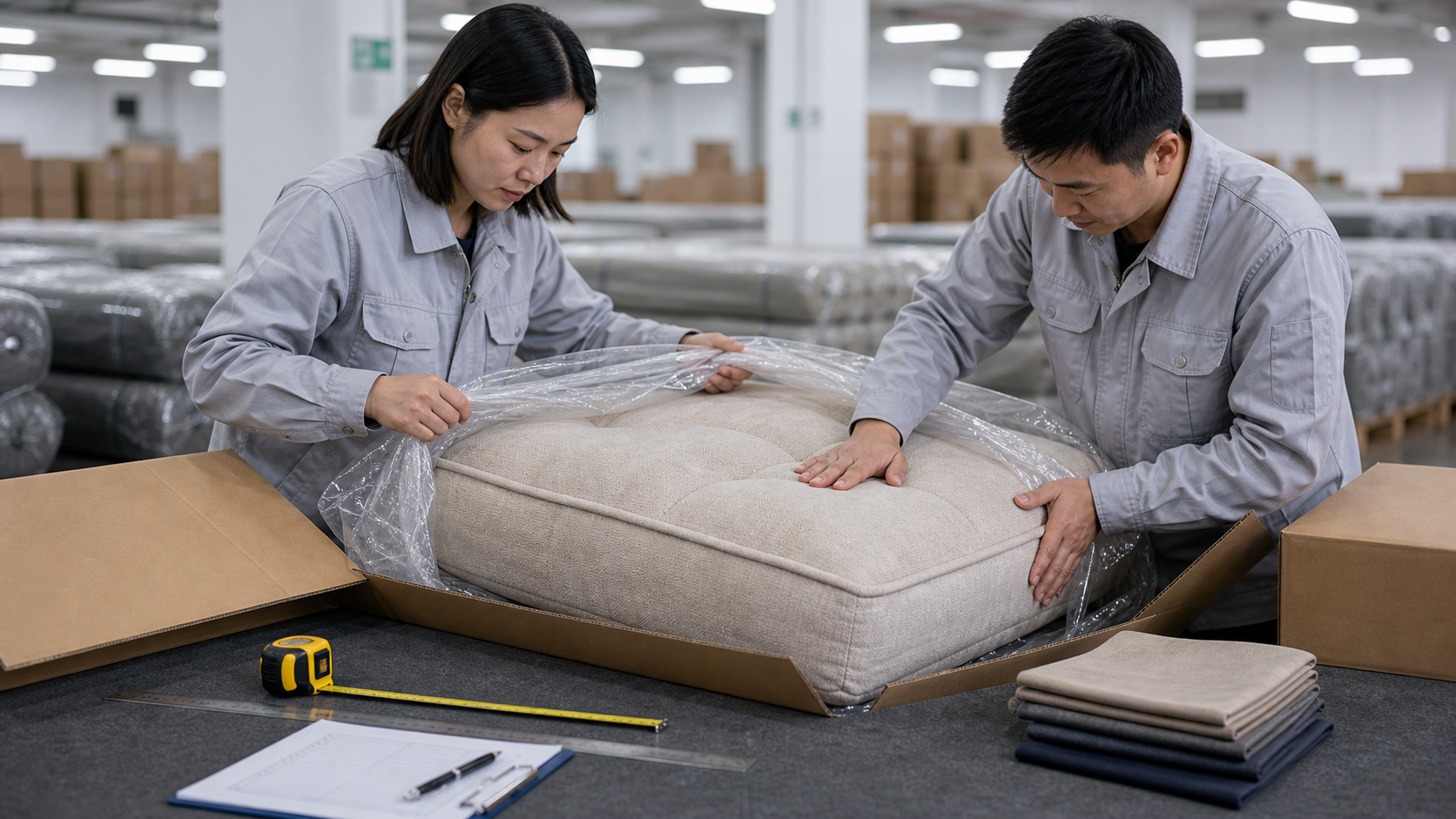
Buyers should never approve only the carton dimensions. They should also ask how the cartons are loaded, protected, labeled, and recovered after arrival. That is where the container loading support page becomes part of the buying checklist rather than an optional extra.
A practical container review should confirm:
- the final packed size for every approved SKU
- gross weight by carton so warehouse handling stays realistic
- whether sectionals, modules, and sleeper units can share one loading plan
- rebound inspection timing at 24, 48, and 72 hours
- carton protection for fabric faces, seams, and corners
- room labels, barcode labels, and mixed-order identification rules
If a supplier only repeats general claims such as “save shipping cost” without giving container or carton detail, buyers should slow the procurement process down and ask for a real loading review.
Material review must support the market you are selling into
The material decision is not only about appearance. Buyers should check whether the upholstery, foam, and finishing details match the target channel. Fabric and sponge choices influence rebound feel, wrinkle visibility after unpacking, and customer complaints during the first delivery batch.
The buyer review should include:
- fabric type and cleaning expectations
- seat foam density or sponge specification
- whether compression leaves visible marks on upholstery panels
- whether the carton design protects handles, seams, zippers, and edges
- whether customization changes the packing method or production stability
For U.S.-market programs, buyers can keep CPSC guidance in the compliance review while confirming labeling, material declarations, and documentation requirements with the supplier.
Factory capability is part of the buying decision
Even good product parameters are not enough if the factory cannot hold them through bulk production. Buyers should use the OEM and ODM sofa manufacturing page to frame the capability discussion around execution, not marketing language.
Before approving a deposit, importers should ask the factory to confirm:
- which size changes are safe without changing the compression result
- whether custom fabric, labels, inserts, and cartons are supported
- whether mixed-model production can stay inside one lead-time plan
- which workshop controls vacuum packing and final packing inspection
- how the factory records rebound checks before shipment
- what the production timeline looks like after sample and packaging approval
That conversation usually tells buyers more than a polished brochure does. A capable factory can explain the manufacturing sequence, packing controls, and project checkpoints in clear language.
Procurement advice for buyers comparing multiple suppliers
The safest buying process is to score every supplier against the same operational questions instead of reacting to a low quotation. A practical procurement checklist is:
- confirm the product size, packing size, and material specification in one sheet
- compare at least two related product pages, not only one sample SKU
- review container quantity assumptions before the PI is signed
- ask for rebound timing and packing inspection evidence
- confirm whether OEM, labels, and carton adjustments affect lead time
- use the contact MagiSofa page to request final quotation details, loading support, and project answers in writing
Wholesalers and import buyers who follow this process usually reduce the most common sourcing mistakes: unclear carton math, weak factory confirmation, and assortment plans that do not survive real shipping conditions.
Conclusion
A good compressed sofa in a box program is built on more than price and visible styling. Buyers need real sizes, carton data, material checks, production clarity, and freight planning before they approve volume. Teams that compare the YS028 sectional, the corduroy lounge module, and the LS1016 folding sofa bed against the container loading workflow and factory capability discussion will make a better procurement decision than teams that compare only sample price.