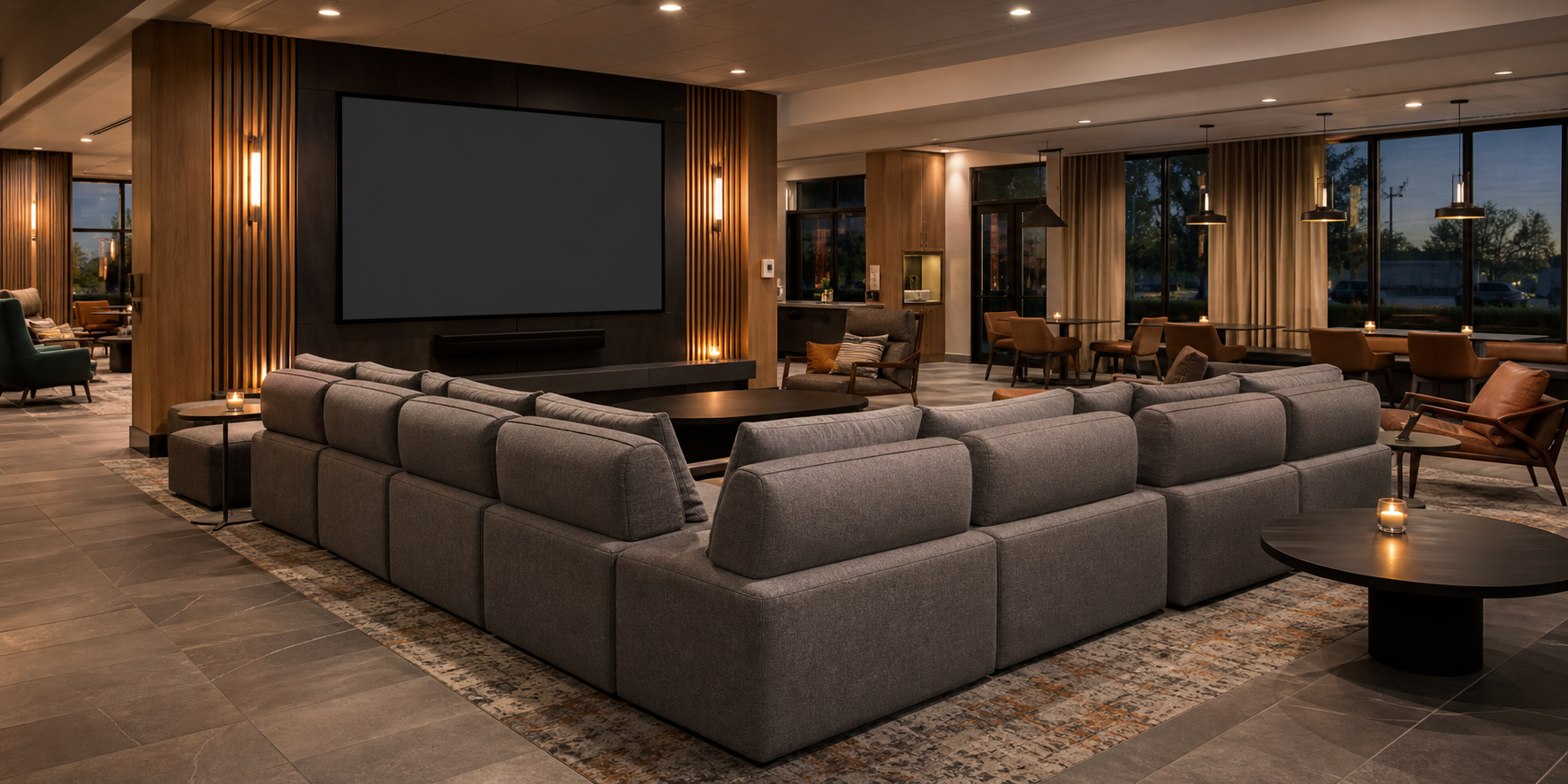
Hotel buyers planning lounge refreshes for football season are not only judging style. A workable compressed sofa program has to balance guest comfort, packed dimensions, rebound timing, material durability, and freight efficiency before the first container is booked. That is why the current outlook for hotel lounges should be reviewed through real compressed sofa in a box, compressed sofa bed, sofa in a box compressed, and compressed foam sofa data instead of generic seasonal décor language.

Why hotel lounge demand changes the sourcing math
Football-season lounge projects usually create a short planning window. Hotels may need to refresh a lobby viewing corner, an executive lounge, a bar-adjacent seating zone, and a few suite-level overflow rooms at the same time. The challenge is that each area wants a different seating format while the buyer still needs one workable import plan.
The live compressed sofa collection gives the best starting point because it frames the commercial rules first:
- standard MOQ for the compressed sofa program starts from 500 units
- mixed-model orders can be reviewed case by case
- sample support is available before bulk approval
- sample lead time is usually about 7 to 15 days depending on customization
- bulk lead time is commonly around 30 to 45 days after sample approval
For hotel procurement teams, those points matter because the seasonal question is not simply which sofa looks premium in a rendering. The real question is whether the lounge mix can be sourced, packed, loaded, unpacked, and installed on schedule without eroding margin through oversized freight.
The main lounge benchmark is a sectional with real packing data
For a primary guest-viewing zone, the compressed sofa L-shape fabric sectional is a practical benchmark because the specification sheet is already specific enough for B2B comparison:
- model: YS028
- upholstery: fabric
- filling: sponge with D35 seat foam
- structure: L-shape sectional with cushion back and straight arms
- packed size: 55 x 55 x 112 cm
- gross weight: 69 kg
- packing method: mail packing and vacuum-compressed export packing
- shipping claim: about 60% CBM reduction versus conventional assembled sofas
- loading reference: up to 2.5 times more units per 40HQ
- rebound target: at least 95% within 72 hours
This model suits the outlook for hotel lounges because it gives buyers a large-format seating option without forcing them into traditional assembled-shipping volume. D35 seat foam also gives procurement teams a clearer comfort and resilience reference than vague marketing language.
Secondary lounge zones need smaller modules, not random filler pieces
Hotels rarely solve football-season viewing demand with one sectional only. Smaller media corners, suite lounges, and overflow waiting spaces often need a lighter module that still matches the export program. The compressed sofa corduroy lounge module is useful here because it introduces another scale and material profile:
- size options: 85 x 85 x 40 cm and 85 x 130 x 40.6 cm
- upholstery: wide-wale corduroy
- seat style: deep channel tufting with low-profile lounge proportions
- packing logic: vacuum-compressed shipping
- shipping claim: about 60% CBM reduction
- loading reference: up to 2.5 times more units per 40HQ
- rebound target: at least 95% within 72 hours
That makes it easier for hotel buyers to keep one compressed-sofa sourcing lane across several room types. Instead of mixing unrelated local-market seats into the project, the buyer can keep fabric review, loading logic, and rebound expectations inside one export program.
Guest-room overflow still matters during seasonal lounge planning
A hotel football-season plan often creates extra demand in family suites, media rooms, or overflow guest areas. That is where the LS1016 folding sofa bed becomes commercially useful:
- product size: 200 x 85 x 70 cm
- lying-flat size: 200 x 215 x 70 cm
- packing size: 112 x 34 x 35 cm
- material: checked velvet fabric
- gross weight: 29.5 kg per carton
- packing quantity: 1 piece per carton
- carton volume: 0.133 CBM
- estimated loading quantity: 503 units per 40HQ
- MOQ: 500 units
- lead time: about 45 days
This matters because seasonal hospitality demand is not limited to lobby viewing. Some hotel buyers also need convertible seating that can support late-night guest use, event overflow, or family-room packages. Including one sleeper-capable format in the review keeps the project commercially flexible.

The hotel outlook depends on material review as much as freight math
Materials decide whether a compressed-sofa program performs well after unloading. YS028 uses fabric upholstery with D35 sponge seat foam. The lounge module uses wide-wale corduroy with deep channel tufting. LS1016 uses checked velvet fabric over a sleeper structure. Those are not cosmetic notes. They affect rebound behavior, daily maintenance, guest feel, and replacement planning.
Hotel buyers should ask the supplier to confirm:
- fabric composition and abrasion suitability for commercial lounge use
- foam density or support structure for every shortlisted seat
- expected rebound timing at 24, 48, and 72 hours
- whether carton design changes after custom fabric or label updates
- whether the same upholstery line is stable across repeat orders
When those questions are skipped, the project may still look efficient on paper but fail later through comfort complaints, appearance inconsistency, or slow room turnover after unpacking.
Factory capability is part of the seasonal demand outlook
The OEM and ODM sofa manufacturing page is important because hotel lounge orders usually need private-label or project-level coordination rather than stock-only purchasing. MagiSofa indicates support around:
- fabric and color selection
- size adjustment with compression-feasibility review
- logo labels, care labels, woven tags, and inserts
- shipping marks, barcode labels, and carton customization
- unpacking manuals and user instructions
- vacuum compression, roll packing, carton size review, and loading-efficiency planning
That capability matters in the current outlook because hotels often work backwards from an opening date. If the supplier cannot explain how size changes affect carton dimensions, rebound timing, or loading count, the buyer is still exposed to schedule risk even if the unit price looks acceptable.
Container planning is where the seasonal idea becomes a real PO
The container loading page should be treated as a buying control, not just a logistics note. Earlier MagiSofa planning examples state that compressed packaging can move a program from roughly 120 pieces per 40HQ to as many as 480 pieces per 40HQ on suitable models, but hotel buyers should only use those gains after validating the final SKU mix.
A practical seasonal lounge review should confirm:
- final carton dimensions and gross weight for each approved model
- whether sectional, modular, and sleeper cartons can be mixed in one container plan
- whether the hotel project needs floor loading or another unloading arrangement
- whether lounge opening dates leave enough rebound time after delivery
- how many units fit in 20GP and 40HQ based on the actual room package
- whether protective carton strength is sufficient for transshipment and project-site handling
This is also where buyers separate marketing claims from commercial reality. A compressed sofa program only saves cost when the approved mix still loads efficiently after all guest-use, material, and branding decisions are finalized.
Practical procurement advice for hotel buyers this season
For U.S.-bound hospitality programs, CPSC guidance should stay in the review path while the supplier confirms labeling, upholstery documentation, and safety communication. That external reference supports the sourcing process, but it does not replace factory-side confirmation.
A disciplined hotel buying sequence is:
- shortlist formats from the compressed sofa collection by room type
- compare YS028, the corduroy lounge module, and LS1016 on product size, packed size, material, and rebound timing
- confirm OEM / ODM details such as labels, inserts, carton marks, and custom-fabric implications
- review exact container calculations before approving the final seasonal SKU mix
- lock lead time and project-delivery timing with the factory
- send the final RFQ through the MagiSofa contact page once the model mix and loading plan are clear
Conclusion
The outlook for hotel football-season lounges is positive for compressed seating, but only when buyers review real product parameters and packing controls. Sectionals, modular lounge units, and sleeper formats can all fit the same hospitality program if the sourcing team verifies dimensions, materials, factory capability, and loading math together.
If your hotel project needs lounge seating that can support seasonal viewing demand without oversized freight, review the MagiSofa product range, confirm the packing plan with the factory team, and contact MagiSofa for OEM / ODM options, container-loading support, and project quotation.