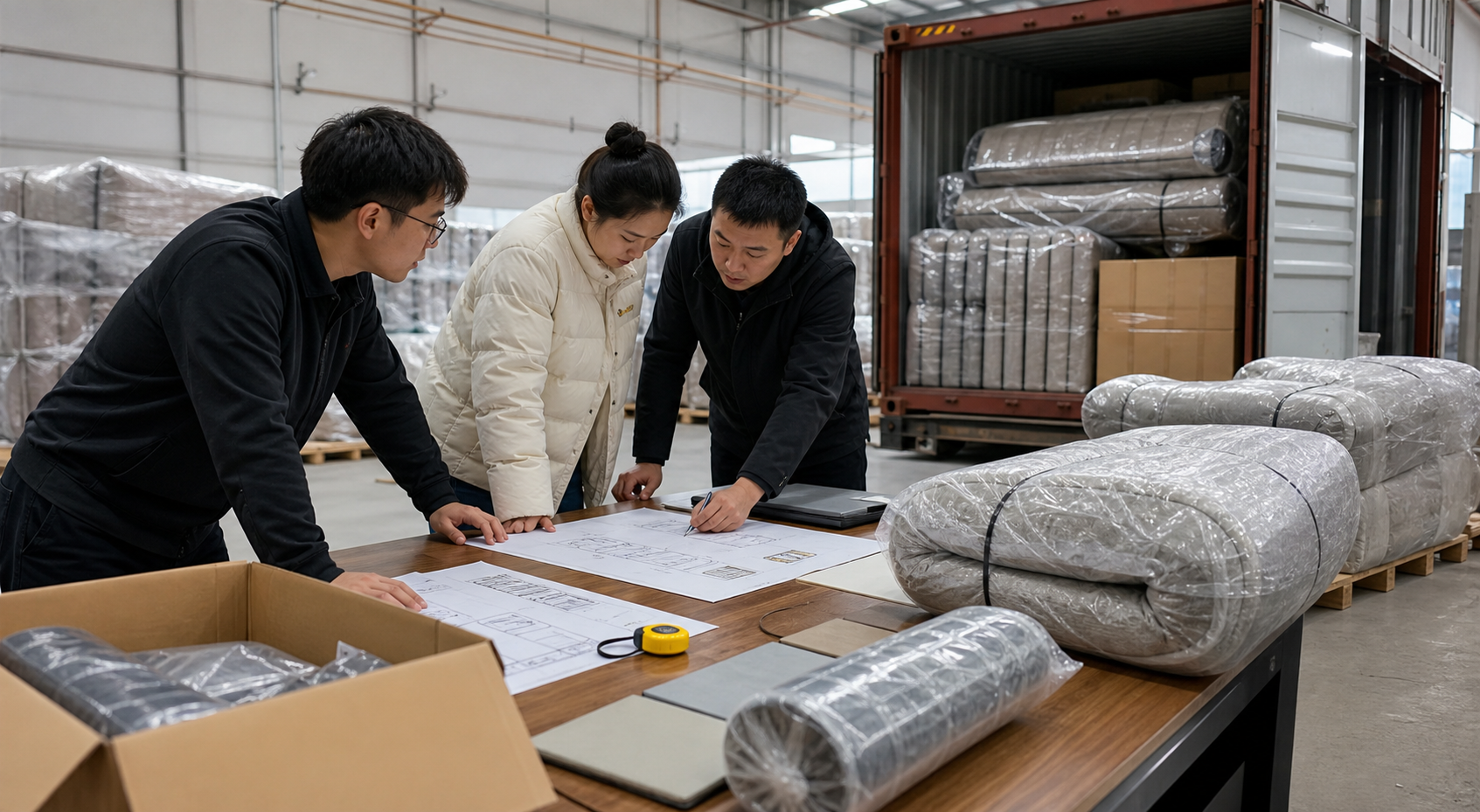
Hotel buyers preparing a football-season lounge often ask whether a compressed sofa program can really balance guest comfort, freight savings, and installation timing. The answer depends on real compressed sofa in a box, compressed sofa bed, sofa in a box compressed, and compressed foam sofa data rather than broad styling promises. The questions below focus on the numbers, materials, packaging details, factory controls, and procurement checks that matter before a hotel project issues the final PO.

Which compressed sofa models should hotel buyers compare first?
Start with the live compressed sofa collection so the buying team can compare more than one room-use scenario inside one sourcing lane. A football-season hotel project usually needs:
- a larger main-viewing sofa for the public lounge
- a smaller modular option for side seating or suite lounges
- a sleeper-capable format for overflow or dual-use rooms
That is why the compressed sofa L-shape fabric sectional, the compressed sofa corduroy lounge module, and the LS1016 folding sofa bed make a practical comparison set. They cover public-lounge seating, smaller commercial lounge zones, and overflow hospitality use without moving outside the compressed-sofa supply chain.
What product parameters should buyers request before approving samples?
The safest way to compare suppliers is to ask for assembled size, packed size, material details, foam data, gross weight, carton quantity, and loading references at the same time. For hotel buyers, the compressed sofa vacuum pack shipping model sets the freight benchmark because MagiSofa describes a vacuum-compressed roll-pack structure with about 60% CBM reduction versus conventional assembled sofas, up to 2.5 times more units per 40HQ on suitable programs, and a rebound rate of at least 95% within 72 hours.
For the main lounge zone, YS028 gives a stronger parameter sheet:
- model: YS028
- upholstery: fabric
- filling: sponge with D35 seat foam
- packed size: 55 x 55 x 112 cm
- gross weight: 69 kg
- packing method: mail packing and vacuum-compressed export packing
- shipping effect: about 60% CBM reduction
- loading reference: up to 2.5 times more units per 40HQ
For overflow rooms or suite lounges, LS1016 adds another useful comparison:
- product size: 200 x 85 x 70 cm
- lying-flat size: 200 x 215 x 70 cm
- packing size: 112 x 34 x 35 cm
- material: checked velvet fabric
- gross weight: 29.5 kg per carton
- carton volume: 0.133 CBM
- estimated loading quantity: 503 units per 40HQ
- MOQ: 500 units
- lead time: about 45 days
If the supplier cannot provide those figures clearly, the hotel team is still reviewing a concept rather than a purchase-ready compressed sofa program.
How important are material and packing details for lounge projects?
They are central, because football-season lounges often run long viewing hours with repeated guest turnover. Hotel buyers should not accept freight claims without matching them to fabric, foam, and packing behavior. The YS028 sectional uses fabric upholstery with D35 seat foam. The lounge module uses wide-wale corduroy with a low-profile commercial seating format. LS1016 uses checked velvet fabric over a convertible sleeper structure.
Practical packing checks should cover:
- exact carton dimensions after the final fabric and label choice
- whether vacuum compression changes seam pressure or rebound timing
- how long the sofa needs to recover after unpacking at 24, 48, and 72 hours
- whether edge protection and carton strength are matched to the export route
- whether inserts, barcodes, or care labels change packed size or carton count
Those checks matter because a hotel lounge opening date can be missed if the sofa arrives with unstable upholstery, slow rebound, or carton damage from weak export packing.

Can one supplier support several hotel lounge zones in the same order?
Yes, but only if the factory can manage more than one model and more than one room function inside one production plan. The OEM and ODM sofa manufacturing page matters here because hotel projects often need color alignment, private-label details, carton marks, care labels, barcode labels, and room-type variations without losing compression feasibility.
Buyers should ask the factory to confirm:
- whether a fabric change affects packed dimensions or rebound rate
- whether a size revision changes the loading quantity or carton pressure
- whether sample approval and bulk production use the same foam density
- whether repeat orders can keep the same upholstery and packaging specification
- whether OEM and ODM work is handled in-house or through another workshop
That is the difference between a supplier who can quote and a supplier who can actually execute a hotel lounge program on schedule.
What should buyers confirm about container loading before deposit?
The container loading page should be treated as part of the procurement decision, not an afterthought. A hotel football-season lounge project usually mixes one sectional format, one compact module, and sometimes one sleeper unit. That means the buyer must confirm how those cartons work together in a real loading plan.
Before deposit, confirm:
- final carton dimensions and gross weight for every approved SKU
- whether sectional, module, and sleeper units can mix in one 20GP or 40HQ plan
- whether floor loading or another unloading method suits the destination warehouse
- how much rebound time is needed before hotel installation
- whether container photos or calculation sheets are available for the final model mix
- whether warehouse handling instructions are included for the destination team
For U.S.-bound hotel programs, CPSC guidance should also stay in the sourcing review while the supplier confirms labeling and safety communication. That external source supports compliance checks, but it does not replace exact factory packing data.
What is the most practical buying sequence for hotel lounge procurement?
The cleanest buying flow is to shortlist real models from the compressed sofa collection, compare their product and packing parameters, review OEM or ODM capability, then lock the loading plan before the PO is released.
A practical sequence is:
- shortlist one sectional, one lounge module, and one sleeper-capable option
- compare size, packed size, foam density, upholstery, MOQ, and lead time
- confirm whether football-season opening dates leave enough rebound time after arrival
- review factory customization controls on the OEM and ODM page
- request the final loading review from the container loading team
- send the approved project inquiry through the MagiSofa contact page
Conclusion
A compressed sofa program can work well for football-season hotel lounges, but only when buyers review real dimensions, packing details, material choices, factory capability, and loading execution together. If your team is comparing compressed sofa options for a hotel lounge refresh, suite overflow room, or hospitality viewing area, use the product data first and then contact MagiSofa for OEM / ODM support, container planning, and project quotation.