
Football season drives short procurement windows for hotel bars, club lounges, apartment amenity rooms, and independent fan-viewing venues. For those projects, a compressed sofa program only works when compressed sofa in a box, compressed sofa bed, sofa in a box compressed, and compressed foam sofa options are checked against real packed sizes, foam specifications, upholstery details, rebound timing, and container plans before the purchase order is approved. Sports lounge buyers need sourcing data that protects both guest comfort and shipping efficiency.
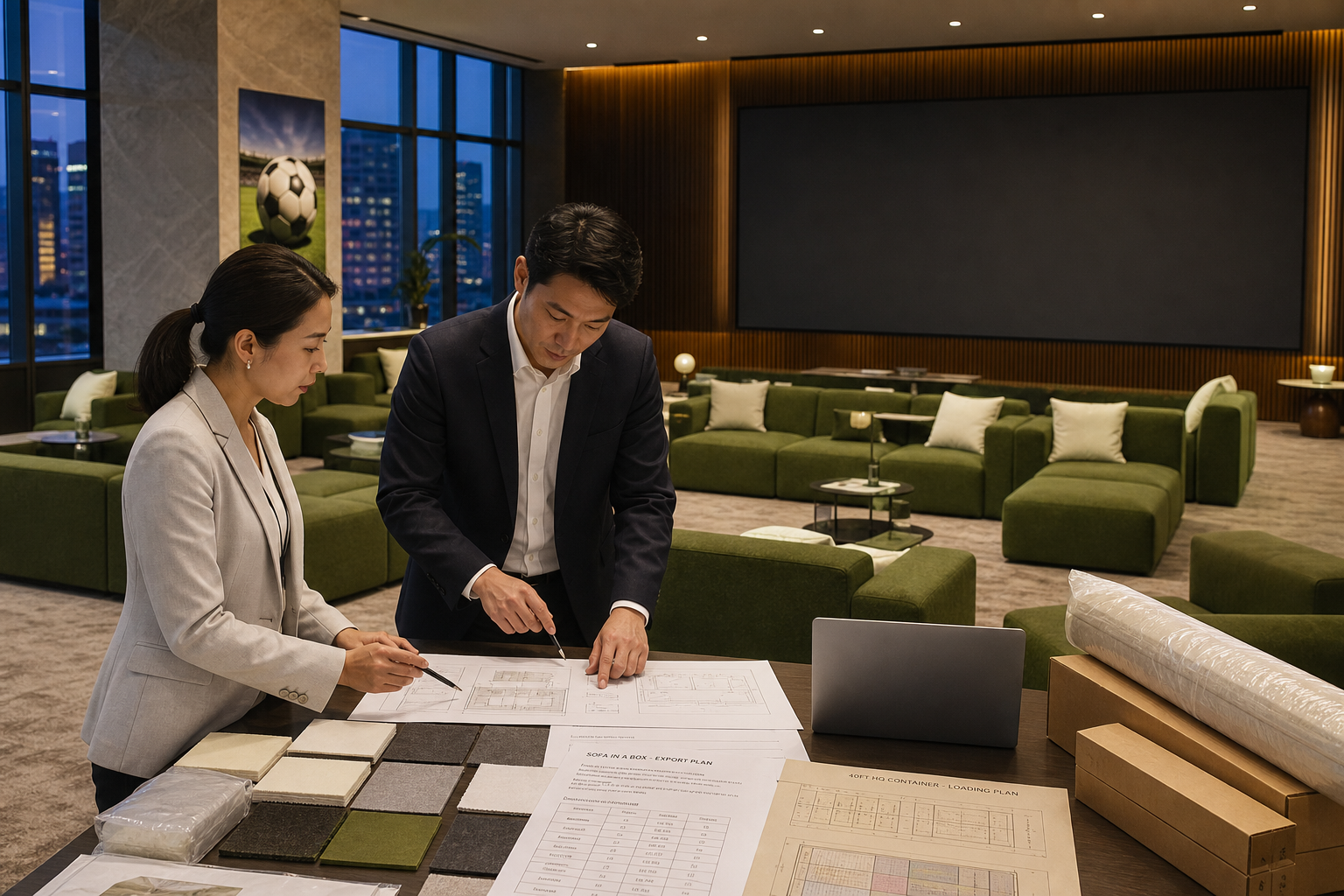
Why do sports lounge buyers start with the full model range?
Sports lounge procurement is rarely a one-SKU job. A project may need modular seating for the main viewing zone, compact accent chairs for side tables, and a sleeper or lounge module for flexible hospitality use. That is why the compressed sofa collection should be reviewed first. It helps buyers separate lounge-facing SKUs from guest-room or apartment SKUs before they compare landed cost.
For football-season viewing projects, the typical buying brief includes:
- central sofa groupings for high-traffic fan seating
- side seating that can be moved for event reconfiguration
- mixed-model orders that still fit one export loading plan
- repeat orders that keep the same packed size and material standard
If a supplier can only explain one sample model, the sports lounge brief is still under-qualified.
Which product parameters matter before pricing is discussed?
The compressed sofa vacuum pack shipping model gives buyers a strong freight-led reference because it is built around export efficiency rather than showroom styling. The product notes point to about 60% CBM reduction versus conventional assembled sofas, up to 2.5 times more units per 40HQ on suitable programs, and rebound recovery of at least 95% within 72 hours after unpacking.
For real sports lounge planning, buyers should compare the compressed sofa L-shape fabric sectional with the LS1016 folding sofa bed because those two references cover both group seating and flexible overflow use.
| Model | Sports lounge use | Packed size | Material details | Procurement note |
|---|---|---|---|---|
| YS028 L-shape sectional | Main viewing zone, VIP corner, or club lounge seating | 55 x 55 x 112 cm | Fabric upholstery with D35 seat foam | Mail packing and vacuum-compressed export packing |
| LS1016 folding sofa bed | Flexible lounge room, private viewing room, or multi-use hospitality suite | 112 x 34 x 35 cm | Checked velvet fabric over sofa bed structure | 29.5 kg gross weight, 0.133 CBM, about 503 units per 40HQ |
| Vacuum-pack shipping model | Projects focused on freight efficiency across mixed lounges | Project-specific packed size after approval | Fabric upholstery with high-density foam support | About 60% CBM reduction and up to 2.5 times more units per 40HQ |
Before a supplier can quote responsibly, sports lounge buyers should ask for:
- assembled size and packed size for every shortlisted SKU
- upholstery type, seat foam density, and rebound target
- gross weight and carton volume by model
- MOQ and lead time for repeat lounge programs
- whether mixed-SKU orders can hold one practical loading sheet
What packing details affect sports lounge installation schedules?
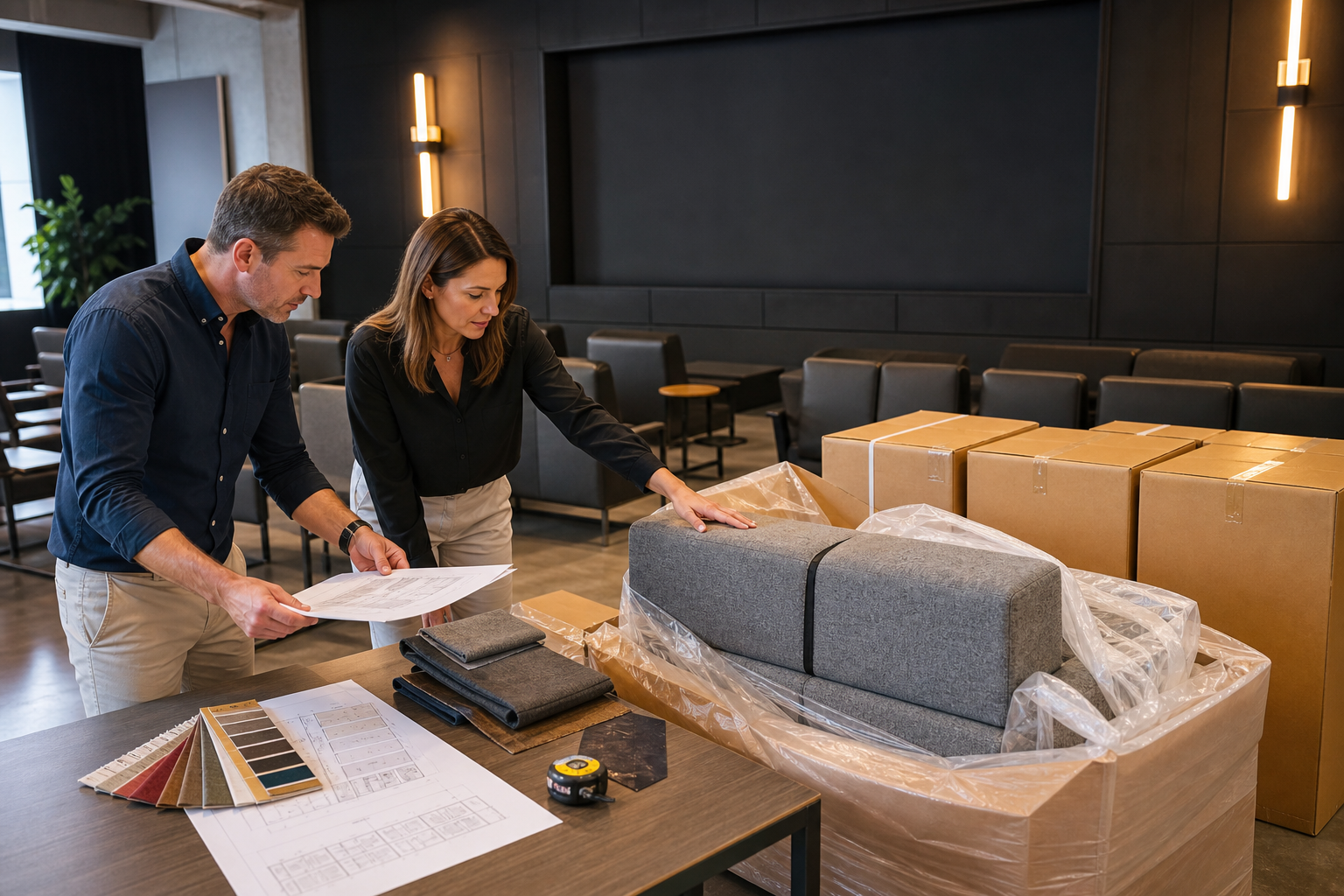
Packing efficiency is useful only when the lounge can open on time. Buyers should review carton dimensions, rebound timing, and site-handling conditions together rather than treating compression as a freight-only topic.
LS1016 gives a useful benchmark because the model lists:
- product size of 200 x 85 x 70 cm
- lying-flat size of 200 x 215 x 70 cm
- packing size of 112 x 34 x 35 cm
- MOQ of 500 units
- lead time of about 45 days
YS028 supports the lounge-use side of the review with its 55 x 55 x 112 cm packed size, D35 seat foam, and vacuum-compressed export packing. Those details matter because many sports lounge projects receive furniture through a warehouse first, then move it into upper floors, narrow service corridors, or staged opening areas.
Buyers should confirm:
- final carton dimensions after the approved fabric and logo set
- whether lounge tables or mixed seating require separate packed-size coordination
- rebound checks at 24, 48, and 72 hours for each approved model
- carton handling limits for venue staff and local installers
- whether repeat orders keep the same carton and compression method
How do materials affect comfort after compression?
Sports lounges place more repeated seat pressure on sofas than a quiet showroom does. That means material review is part of risk control. Buyers should check whether the upholstery and filling still support a clean commercial presentation after compression, unpacking, and repeated nightly use during the global football season.
The most practical questions are:
- whether D35 seat foam or an equivalent grade is locked into the final order
- whether a fabric change alters packed size or rebound performance
- whether piping, tufting, or custom stitching changes compression results
- what level of temporary surface creasing is normal after 24 to 72 hours
- how the supplier documents sample-to-bulk consistency on lounge programs
This is where compressed foam sofa claims need proof. If the supplier cannot connect foam grade, fabric choice, rebound timing, and finished appearance in one answer, the buyer is still missing decision-grade information.
Which factory capability checks prevent rework on lounge projects?
The OEM and ODM sofa manufacturing page matters because sports lounge projects often need more than stock upholstery. Buyers may need private-label cartons, custom colors, fire-label coordination, mixed-SKU production, or a revised module size that still has to remain compression-feasible.
Before deposit, the lounge sourcing team should ask the factory to confirm:
- whether custom carton printing, barcodes, and care labels are handled in-house
- whether size revisions are checked for compression feasibility before sample approval
- whether the same foam, fabric, and packed-size standard can be held on repeat runs
- whether lounge modules and sleeper units can be combined in one production plan
- whether QC records include rebound checks and export-pack verification
These checks separate a repeatable B2B supplier from a sample-only vendor.
Review your sports lounge sofa plan
Share your venue layout, seat count, destination port, and target opening date for a compressed sofa recommendation with packing and loading guidance.
When should buyers review container loading and compliance?
The container loading page should be part of the buying review before the PO is released, not after. Sports lounge programs often mix sectionals, compact modules, and flexible-use units in one shipment, which changes floor-loading order, carton count, and unloading labor at the destination.
Before payment, confirm:
- final packed dimensions and gross weight for every approved SKU
- whether the venue mix works better in a 20GP or 40HQ loading plan
- whether the loading sheet reflects the real balance of sectionals, lounge modules, and sleeper units
- whether the rebound window fits the venue opening date and fit-out schedule
- whether local safety communication is reviewed alongside CPSC guidance for U.S.-bound projects
The final step is to send the project brief through the MagiSofa contact page with the lounge layout, seat quantity, destination port, preferred fabric, and launch date. That allows the supplier to answer with real packing, material, and loading data instead of vague claims.
Conclusion
Compressed sofa in a box sourcing works for sports lounge buyers when product parameters, material recovery, factory controls, and container math are reviewed together. If your team is planning football-season viewing spaces, contact MagiSofa for a buying review based on real product data, export packing, and OEM or ODM support.