
This real sourcing scenario shows why compressed sofa buyers can still stall after comparing three or four suppliers for the same hotel lounge brief. A Southeast Asia importer needed seating for a football-season hotel lounge refresh, but the quotations were not comparable because each factory described the product differently. One quote only showed appearance photos, another showed price without packed dimensions, and a third offered a compressed sofa in a box program without clarifying rebound timing, carton weight, or repeat-order controls. The buying team only moved forward after it compared real product parameters, material details, factory capability, and loading math in one review.

Define the lounge brief before comparing factories
The first fix was to stop asking every supplier for a generic hotel sofa price. The importer separated the project into one main viewing lounge, two quieter side seating zones, and several suite-level overflow rooms. That distinction mattered because a hotel lounge built for football-season traffic needs deeper seating, more stable rebound after unpacking, and a clearer receiving plan than a decorative lobby corner.
The buyer used the live compressed sofa collection as the comparison baseline instead of approving one mood-board image too early. This helped the team decide which SKUs needed sectional seating for group viewing, which ones needed sleeper capability for guest overflow, and which modules had to stay compact enough for service-lift delivery and phased installation.
Compare model parameters instead of appearance only
The importer narrowed the shortlist to three real product directions. The compressed sofa L-shape fabric sectional gave the clearest benchmark for the main lounge because MagiSofa presents it as Model YS028 with fabric upholstery, sponge filling, D35 seat foam, cushion-back support, and a packed size of 55 x 55 x 112 cm at about 69 kg gross weight. That matters when lounge cartons must move from receiving dock to storage room to final installation area without repacking.
For suite overflow and family-use rooms, the LS1016 folding sofa bed covered a different requirement. Its listed sofa size is 200 x 85 x 70 cm, its lying-flat size is 200 x 215 x 70 cm, and its packing size is 112 x 34 x 35 cm with 29.5 kg gross weight, 1 piece per carton, 0.133 CBM, and an estimated 503 units per 40HQ. Those are usable buying numbers, not filler language.
For smaller side zones, the compressed sofa corduroy lounge module added a modular option with wide-wale corduroy upholstery and two published size references, 85 x 85 x 40 cm and 85 x 130 x 40.6 cm. That gave the importer a realistic way to mix one sectional anchor with smaller modules instead of overbuying identical large sofas for every zone.
| Lounge zone | Product reference | Key product parameters | Packing data that changed the decision |
|---|---|---|---|
| Main viewing lounge | YS028 L-shape sectional | Fabric upholstery, sponge filling, D35 seat foam, sectional layout | 55 x 55 x 112 cm packed size, about 69 kg gross weight |
| Suite overflow rooms | LS1016 sofa bed | 200 x 85 x 70 cm sofa size, 200 x 215 x 70 cm flat size, checked velvet fabric | 112 x 34 x 35 cm packing, 29.5 kg, 0.133 CBM, 1 piece per carton |
| Side seating zones | Corduroy lounge module | 85 x 85 x 40 cm or 85 x 130 x 40.6 cm, modular low-profile seating | Vacuum-compressed packing for mixed lounge layout planning |
Put carton planning into the sourcing case, not after it
The lounge project stalled earlier because suppliers were being compared on FOB price without one common packing sheet. Once the importer reviewed the container-loading support page, the conversation changed from visual preference to freight execution.
The team built one worksheet listing packed dimensions, carton quantity, gross weight, rebound window, and loading assumptions for every SKU. That exposed the real gap between suppliers. A quote that looked cheaper on the sofa price became weaker when the factory could not confirm whether carton marks, care labels, or fabric changes would alter the final package size. Another supplier could not say who signed off on loading photos before shipment.
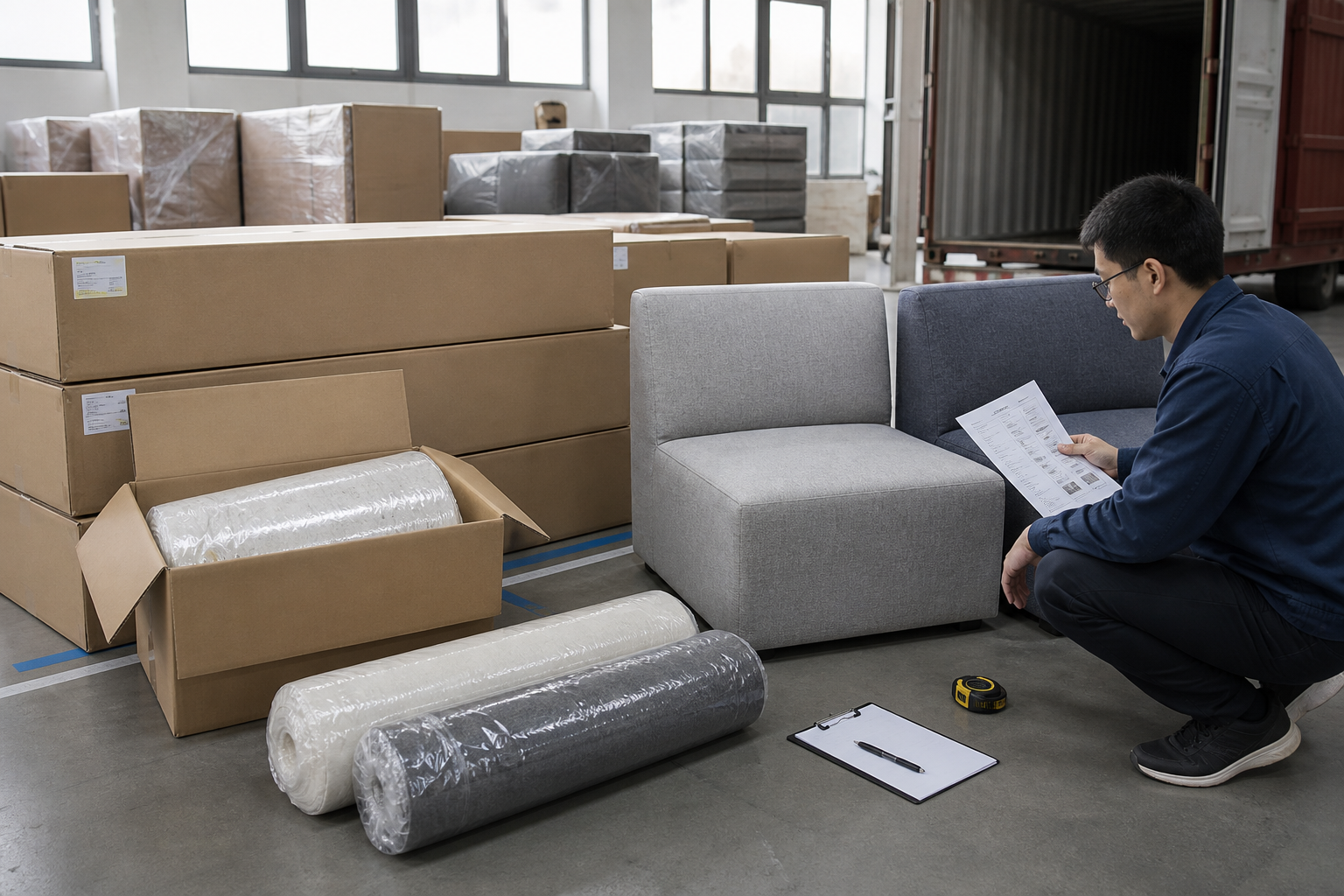
For this project, the practical procurement advice was simple: do not release deposit until every approved lounge model has a final packed size, gross weight, and carton-count line item. If a supplier says the package will be confirmed later, the importer is still comparing samples, not a repeatable hotel program.
Check material recovery and lounge durability together
Material review was the second place where buyers still struggled. One vendor promoted a compressed foam sofa concept for shipping savings but could not explain fabric creasing, rebound timing, or how the seat would behave after unpacking. The MagiSofa comparison set was stronger because it linked freight claims to actual material and recovery references.
The YS028 sectional tied the lounge brief to fabric upholstery and D35 seat foam. The LS1016 product page tied the sleeper brief to checked velvet fabric and a defined carton format. On the modular side, the corduroy lounge module gave the importer a different upholstery direction for softer secondary seating. Across the compressed range, MagiSofa also states a vacuum-pack route aimed at about 60% CBM reduction versus conventional assembled sofas and at least 95% rebound within 72 hours on suitable models. The buyer treated those numbers as checkpoints that had to be confirmed against the final approved SKU mix, not as generic claims.
That is the right standard for hotel lounge buying. Ask how long each model should stay open before guest use, which foam grade is approved in the bulk order, what surface creasing is acceptable after 24 to 72 hours, and whether the same upholstery still keeps the planned carton size after color or stitching changes.
Use factory capability to separate sample makers from suppliers
The sourcing decision only stabilized when the buyer reviewed the OEM and ODM sofa manufacturing page. The project needed more than a stock sofa. The importer wanted carton marks for different hotel properties, consistent fabric codes across repeat runs, and a loading plan that could mix sectionals, modules, and sofa beds in one export schedule.
The factory-capability review focused on five questions:
- Can the factory keep the same fabric, foam, and packed-size standard across repeat orders?
- Are barcode labels, logo marks, and hotel-specific carton prints handled before loading?
- Who checks rebound condition and carton condition before container sealing?
- Can one production plan combine lounge sectionals, compact modules, and sleeper units?
- Will the supplier provide QC photos, packing photos, and final loading photos for approval?
Those questions turned the article topic into a real sourcing scenario instead of a broad trend post. Buyers still struggle with compressed sofa comparisons when suppliers talk only about style, but the gap closes quickly once factory controls are part of the RFQ.
Approve the container mix before approving the final quote
The final improvement in this hotel lounge case was to review unit mix and freight together. The sectional program worked for the main room, the corduroy module worked for side seating, and the sofa bed covered suite overflow. But that mix only made sense after the importer checked whether the shipment plan still matched the destination warehouse, service-lift limits, and installation calendar.
Before the quote was approved, the buyer required:
- packed dimensions and gross weight for every final SKU
- carton count by lounge zone and suite zone
- rebound timing that fit the hotel opening schedule
- one confirmed loading plan for the mixed-SKU order
- destination-market review together with CPSC guidance for U.S.-bound compliance communication
That prevented the common mistake of selecting a sofa in a box compressed offer for freight savings without validating the on-site handling sequence.
What the importer approved in the real sourcing scenario
The hotel team approved the order only after the supplier could show specific product parameters, packaging details, material notes, factory controls, and practical loading support in one package. In this case, the winning direction combined a sectional for the main viewing area, smaller modules for overflow seating, and sleeper capacity for selected rooms, all under one container-planning review.
For other importers, the takeaway is straightforward. If your team is sourcing a hotel lounge program for football-season demand, ask for the same evidence: finished dimensions, packed dimensions, gross weight, carton count, upholstery details, rebound window, factory QC control, and final loading photos. Then contact MagiSofa with the lounge layout, room count, destination port, and target opening date so the quote is built on real operating data instead of a generic catalog comparison.
Review your hotel lounge plan
Share your lounge layout, room mix, and destination port for a compressed sofa review with packing data, material checks, and loading support.