
For football-season lounge projects, a compressed sofa program is useful only when the freight benefit and the seating function both survive commercial reality. Fan zones, hotel sports lounges, apartment clubhouses, and viewing bars need sofas that fit the room plan, recover on time after unpacking, and move through the import chain without wasting carton space. That is why buyers should compare each compressed sofa in a box, compressed sofa bed, and compressed foam sofa option through hard product parameters, packing dimensions, material details, and factory loading support instead of relying on lifestyle visuals alone.
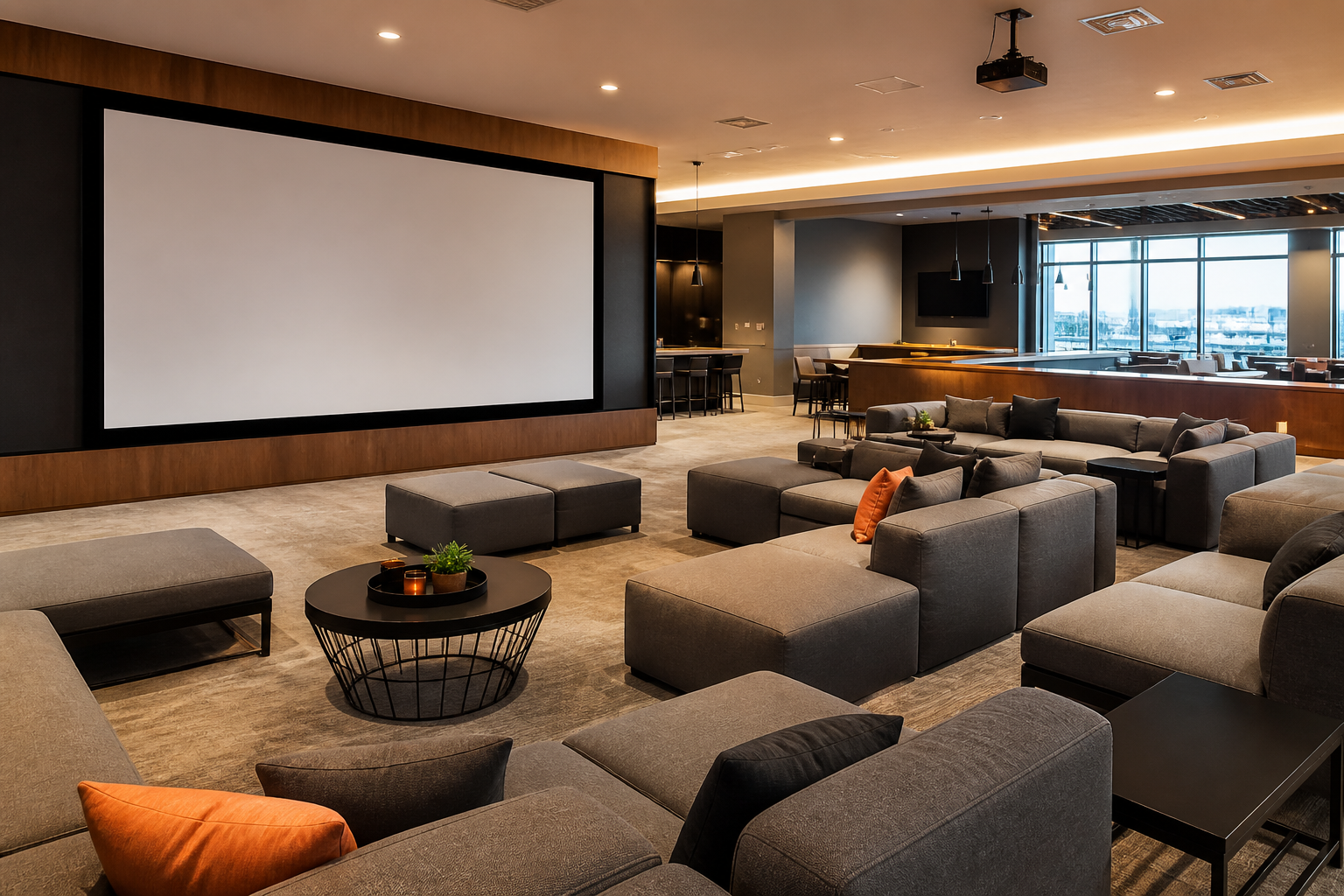
Start with the room plan and the model mix
A sports lounge order rarely uses one sofa type only. The main viewing wall may need sectional seating, the side zones may need flexible modules, and a VIP room or serviced-apartment corner may need convertible seating. Buyers should start with the live compressed sofa collection so the sourcing brief stays inside one real MagiSofa product lane instead of mixing unrelated residential references.
Before the RFQ is approved, the room-planning file should identify:
- the seat count for the main screen area and the side viewing areas
- whether the cartons must pass lifts, tight corridors, or phased site delivery
- how much rebound time is available between unloading and guest use
- whether the project is a one-off venue, a hotel chain rollout, or a wholesaler stock program
That planning step matters because a sofa can look suitable in a rendering and still fail the project once packed size, labor route, and installation timing are checked together.
Large viewing zones need real sectional data
For the main fan-viewing area, the compressed sofa L-shape fabric sectional is the clearest benchmark because MagiSofa exposes usable sourcing detail instead of vague marketing copy. Buyers can review it as a sectional program with fabric upholstery, sponge filling, D35 seat foam, cushion-back support, straight arms, and a packed size of about 55 x 55 x 112 cm at roughly 69 kg gross weight.
Those numbers matter in a sports lounge because they answer three practical questions at once:
- whether the main seating zone will fit the circulation plan after installation
- whether each packed unit can move through the destination handling route
- whether the freight model still works when the order is scaled beyond one sample set
The sectional is also a useful reference for buyers who need a fuller hospitality look without giving up the export efficiency of a roll-packed sofa program.
Flexible lounge modules help fan zones stay adaptable
Not every viewing zone should be built around one large sectional. The compressed sofa corduroy lounge module is more useful for side clusters, waiting corners, and overflow seating because it supports lower-profile planning with two published size options: about 85 x 85 x 40 cm and 85 x 130 x 40.6 cm. The model uses wide-wale corduroy upholstery and a vacuum-compressed roll-pack format suited to mixed commercial orders.
For sports lounge buyers, that module has two advantages:
- it makes it easier to reconfigure the fan zone after the peak football-season window ends
- it broadens the same order into apartment clubhouse, hotel lounge, and bar-adjacent seating scenarios
When a buyer combines sectional anchors with modular side seating, the procurement review becomes more realistic because the supplier is being tested on a real mixed-SKU commercial program, not a single hero sample.

Sleeper-capable models cover mixed-use hospitality projects
Some fan-zone projects also need sofas that support VIP suites, late-night guest rooms, or apartment-style hospitality spaces. That is where the LS1016 folding sofa bed becomes relevant. Its live product detail is specific enough for procurement work: sofa size about 200 x 85 x 70 cm, lying-flat size 200 x 215 x 70 cm, packing size 112 x 34 x 35 cm, checked velvet upholstery, 29.5 kg gross weight, 1 piece per carton, about 0.133 CBM, MOQ around 500 units, and lead time about 45 days.
That makes the model practical when the same project needs:
- sports lounge seating in public viewing areas
- dual-use seating in serviced apartments or hotel suites
- an export program that keeps carton handling manageable across different room types
For buyers comparing a sofa in a box compressed offer against a conventional assembled sleeper, those published packing details are what make the freight comparison credible.
Packing performance is the real reason the program works
The freight value of a compressed sofa program comes from verified packing performance, not from the phrase alone. The compressed sofa vacuum pack shipping model frames that value clearly around about 60% CBM reduction versus conventional assembled sofas, up to 2.5 times more units in a 40HQ, and at least 95% rebound within 72 hours after unpacking on suitable programs.
| Fan-zone requirement | Product or material detail to confirm | Packing detail that changes the freight result | Buyer risk if skipped |
|---|---|---|---|
| Main viewing area | Fabric upholstery, D35 seat foam, sectional layout | 55 x 55 x 112 cm packed size and about 69 kg gross weight | Cartons may not match lift limits, staging zones, or labor planning |
| Side seating clusters | Corduroy module size and low-profile layout | 85 x 85 x 40 cm or 85 x 130 x 40.6 cm format in a mixed loading plan | Side zones may lose flexibility or waste storage space |
| VIP or mixed-use seating | Checked velvet sleeper structure and flat-use function | 112 x 34 x 35 cm, 29.5 kg, 1 carton, 0.133 CBM | The buyer cannot model mixed-SKU loading or recovery timing |
| Freight-efficiency target | Approved model mix and carton count | 60% CBM reduction claim and 40HQ assumptions | Savings stay theoretical instead of contract-ready |
The buyer should also confirm whether label changes, carton printing, fabric substitutions, or mixed-order ratios will alter packed size before the PO is released.
Factory execution decides whether the freight math survives production
A fan-zone project does not succeed just because the sample recovers well once. It succeeds when the factory can repeat the same material, packaging, and carton controls at order scale. The OEM and ODM sofa manufacturing page matters because many sports lounge orders need custom labels, barcode marks, project-specific upholstery, and mixed-model production without breaking the compression plan.
Before deposit, buyers should ask the factory to confirm:
- who signs off on the final packed dimensions after material approval
- whether carton print, barcode labels, and inserts are handled in-house
- how rebound checks are recorded after 24, 48, and 72 hours
- whether sectionals, modules, and sleeper units can stay inside one controlled export-packing workflow
- who owns the loading approval if the project opening date changes during production
For U.S.-bound orders, teams can also review CPSC guidance while they align labeling and compliance review with the site delivery schedule.
Close the order with loading control and a practical buying checklist
The container-loading support page should be part of the approval path before mass production begins. Buyers should ask for a loading sheet that lists model code, approved packed size, gross weight, carton quantity, and the loading logic for the real fan-zone model mix. That is the point where project planning becomes a defendable B2B procurement decision instead of a generic lounge concept.
Before the PO is signed, the sourcing team should lock:
- the final room-to-model assignment for sectional, modular, and sleeper units
- upholstery, foam, and material details tied to the approved quotation
- packed dimensions, carton counts, and rebound timing for each exact SKU
- the mixed-SKU loading plan for the real booking window
- the handoff contacts for QC, packing, and shipment release
If your team is planning a football-season lounge or fan-viewing rollout, contact MagiSofa with the room mix, destination port, and quantity split for a review built on real product parameters, material details, and container-loading support.
Review your fan-zone sofa plan
Share your room mix, destination port, and quantity split for a compressed sofa review with packing data, rebound timing, and loading support.