
A compressed sofa in a box can pass a showroom review and still create trouble after weeks in export packaging. For importers supplying hotel lounges, apartment projects, and retail campaigns before football-season demand, the real question is not whether one fresh sample looks good. It is whether production units recover to an agreed shape, size, comfort, and appearance after the actual compression-hold and transport cycle.
The MagiSofa compressed sofa collection shows multiple roll-packed and vacuum-packed formats. Buyers should qualify each model, fabric, foam system, carton, and order lot separately because recovery results cannot safely be transferred from one construction to another.
Why a short sample test misses production risk
A supplier may compress a hand-selected sample for only a few hours, open it in warm conditions, and photograph the best angle. A production shipment may remain compressed for several weeks and face temperature changes, repeated handling, carton stacking, and delayed unpacking. These are different test conditions.
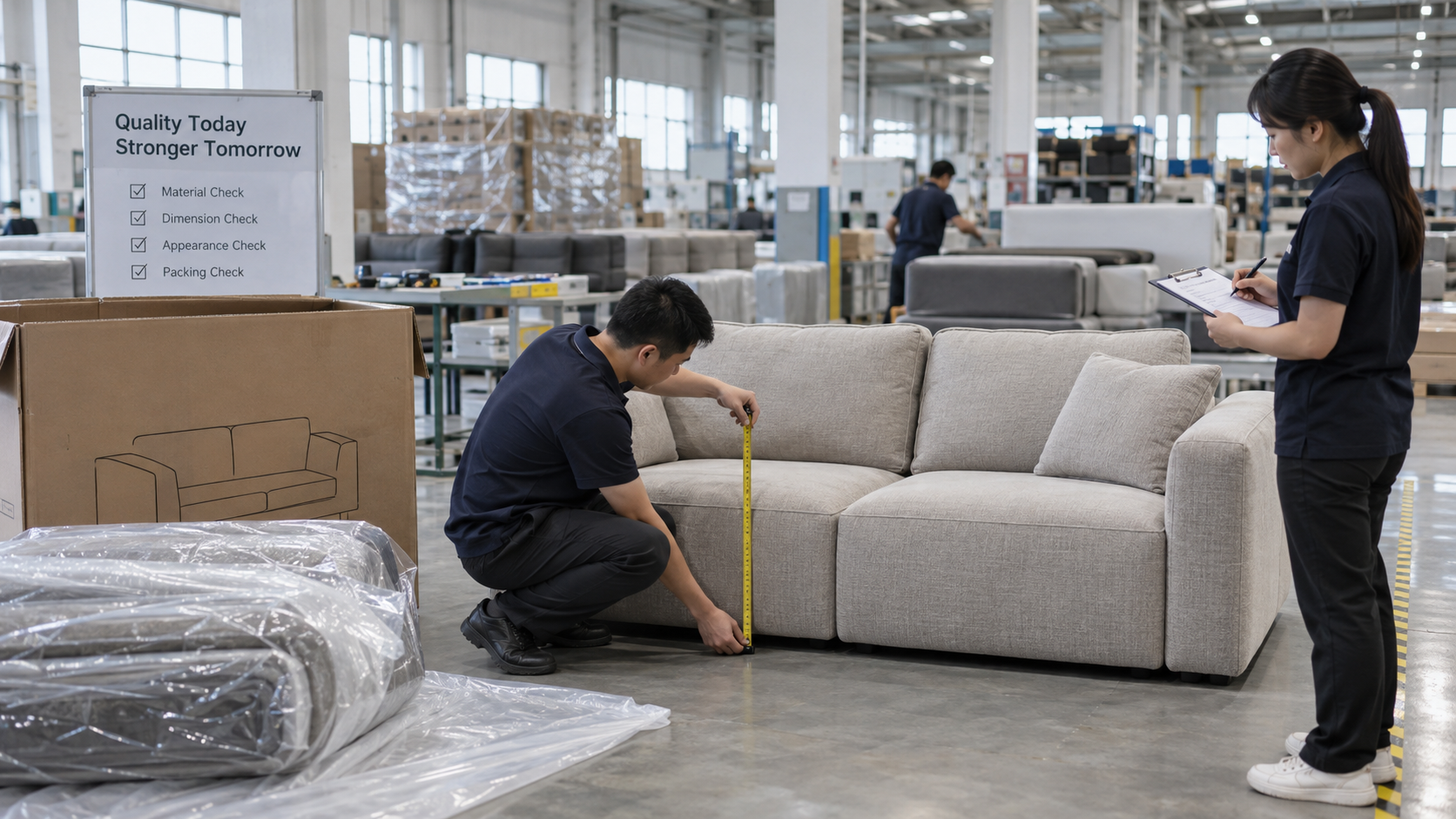
Before approving a compressed foam sofa, define the maximum compression-hold period, test-room temperature and humidity, unpacking method, measurement points, and pass time. Record product dimensions, seat height, back profile, symmetry, seam alignment, surface creasing, odor, and visible damage at opening and at agreed checkpoints such as 24, 48, and 72 hours. A pass/fail statement without timed measurements and photos is weak procurement evidence.
Lock foam, fabric, and construction before testing
Recovery depends on the complete bill of materials. Buyers should specify foam density and layer thickness, upholstery composition and fabric code, backing, seam construction, zipper details, internal support, and the approved product dimensions. Even when two products share the label compressed sofa bed, a change in foam formulation or fabric tension can alter rebound speed and final appearance.
Use a signed golden sample and revision-controlled specification. The MagiSofa OEM and ODM process provides a basis for discussing private-label materials, carton artwork, model revisions, and production records. The purchase order, approved sample, bill of materials, and inspection checklist should all carry the same SKU and revision. For destination-market obligations, buyers should identify applicable requirements with an appropriate authority such as the U.S. Consumer Product Safety Commission rather than assuming one compliance file covers every construction.
Build a repeatable recovery test protocol
The protocol should use random finished production units, not only laboratory samples. Mark fixed measurement points before compression, photograph the unit from consistent angles, and record who performed each step. After opening, follow the same setup instructions a customer or hotel installer will receive.
| Checkpoint | Evidence to capture | Example release rule |
|---|---|---|
| Before compression | Product dimensions, seat height, photos, foam and fabric codes | Matches approved specification and signed sample |
| Carton release | Compression date, packed size, gross weight, seal condition | Within agreed carton and weight tolerance |
| Opening | Time, room conditions, damage and odor notes | No cut, contamination, or structural damage |
| 24 to 72 hours | Timed dimensions, profile photos, seam and surface review | Meets the buyer-approved recovery window |
| Final review | Comfort, symmetry, appearance, corrective action | All critical defects closed before shipment |
The LS1016 folding compressed sofa bed lists a 112 × 34 × 35 cm carton, 29.5 kg gross weight, and 0.133 m³ per carton for its stated configuration. These are useful model-specific reference parameters, but the importer should measure the selected production SKU and carton rather than applying those figures to another sofa in a box compressed for export.

Connect recovery evidence to packaging and freight
Recovery performance and shipping efficiency must be reviewed together. The packaging specification should cover the inner bag, vacuum or roll-compression method, protective layers, carton grade, strapping, labeling, accessory placement, and moisture-control method where required. Measure finished cartons after the normal compression-hold period because an over-compressed unit may reduce CBM while increasing recovery risk.
The compressed sofa vacuum-pack shipping model describes vacuum-compressed roll packing, a reinforced outer carton, and a rebound target. Treat these as model-specific claims that need confirmation under the buyer’s approved test conditions. Keep photos of the packed unit, scale reading, outer dimensions, label, seal, and random-unit selection in the shipment file.
Audit factory capability before peak-season orders
Factory capability is more than monthly production capacity. Ask who controls incoming foam and fabric, how compression dates are traced, how long packed units may remain in storage, how measuring tools are calibrated, and who can stop shipment after a failed recovery test. Review the production workshop, compression equipment, packing line, quality records, and corrective-action process.
For a football-season program, work backward from the required installation date. Allow time for sample approval, material booking, bulk production, compression-hold testing, inspection, container booking, transit, customs clearance, local delivery, unpacking, and full recovery. A rushed order that removes the recovery window simply moves factory risk to the importer, hotel, or retailer.
Release the container with SKU-level evidence
Use the MagiSofa container loading guide to frame the loading discussion, then request a dated plan based on measured production cartons. Confirm carton orientation, stacking limits, container door clearance, load distribution, mixed-SKU placement, dunnage, and any pallet requirement. Recalculate CBM and unit count when the carton size changes.
The final release pack should include the signed sample, current bill of materials, material approvals, timed recovery results, product and carton measurements, inspection photos, packing list, loading map, container and seal numbers, and corrective-action closure. Procurement should withhold shipment release until the physical loading evidence reconciles with the approved SKU quantities and the recovery test has passed.
Importers can contact MagiSofa for a model-specific recovery and loading review with the target SKU, fabric, destination, quantity, and required delivery date.
Validate Recovery Before Container Release
Share your target model and shipping plan for a practical recovery, carton, and loading review.